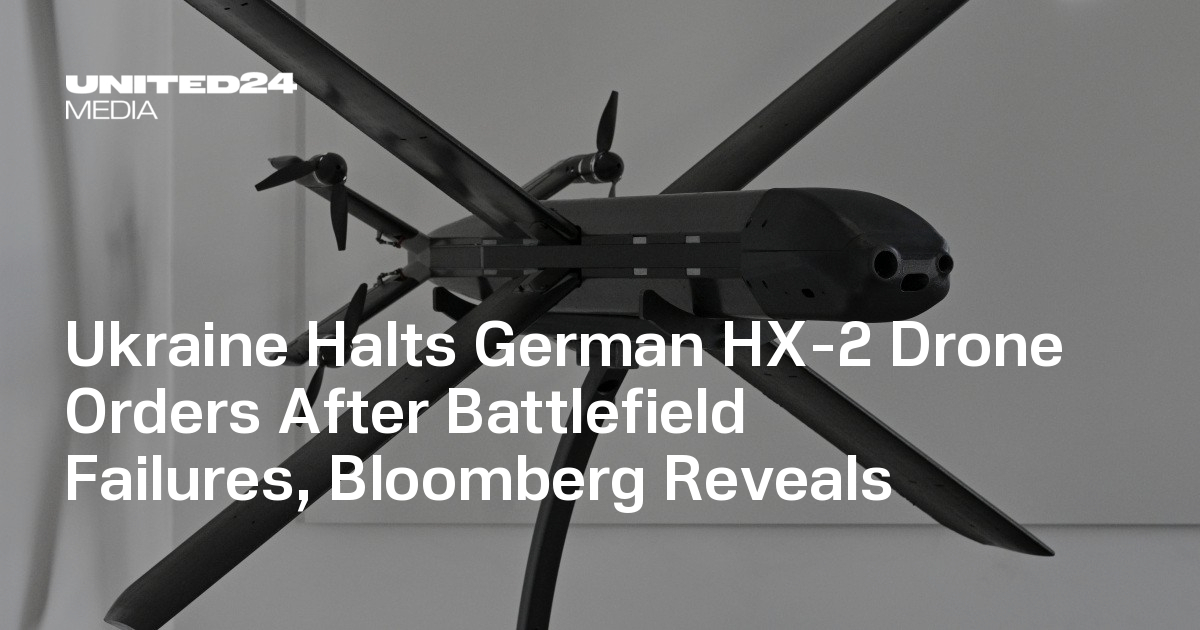
U.S. soldiers tested German defense AI company Helsing's HX-2 attack drones during military exercise...
The AMW Read
Real-world deployment of autonomous attack drones by U.S. troops updates Helsing's player map position and validates defense-AI field-testing pattern; segment-level significance for robotics/physical AI.

U.S. soldiers tested German defense AI company Helsing's HX-2 attack drones during military exercises in Lithuania, successfully striking targets. This marks a real-world deployment of AI-powered autonomous drones in a NATO operational context, moving Helsing from a European defense contractor to a player under direct U.S. military evaluation.
Why it matters: Helsing's field deployment with U.S. forces plugs into a recurring pattern where sovereign-defense AI startups prove their systems in theater, building credibility against incumbent defense primes. The HX-2 drone — a loitering munition with on-board AI for target recognition and navigation — represents a convergence of computer vision, edge inference, and combat autonomy. For the broader AI industry, this signals that defense-vertical AI is entering a live-testing phase, not just procurement paperwork. The geopolitical undercurrent is clear: European and U.S. defense AI systems are being interoperably tested on NATO terrain, reducing reliance on non-allied drone supply chains.
Grounded expert take: Helsing’s emergence as a U.S.-tested supplier validates the thesis that AI-native defense startups can bypass the long, exclusive primes-dominated acquisition cycle via rapid field trials. The exercise outcome does not guarantee a formal procurement pipeline, but it de-risks Helsing’s position in the defense-AI segment and pressures incumbents (Palantir, Anduril, Lockheed) to accelerate their own autonomous-drone programs. The key open question is whether Helsing’s on-device AI stack can generalize beyond controlled drills to contested-electromagnetic-spectrum environments.