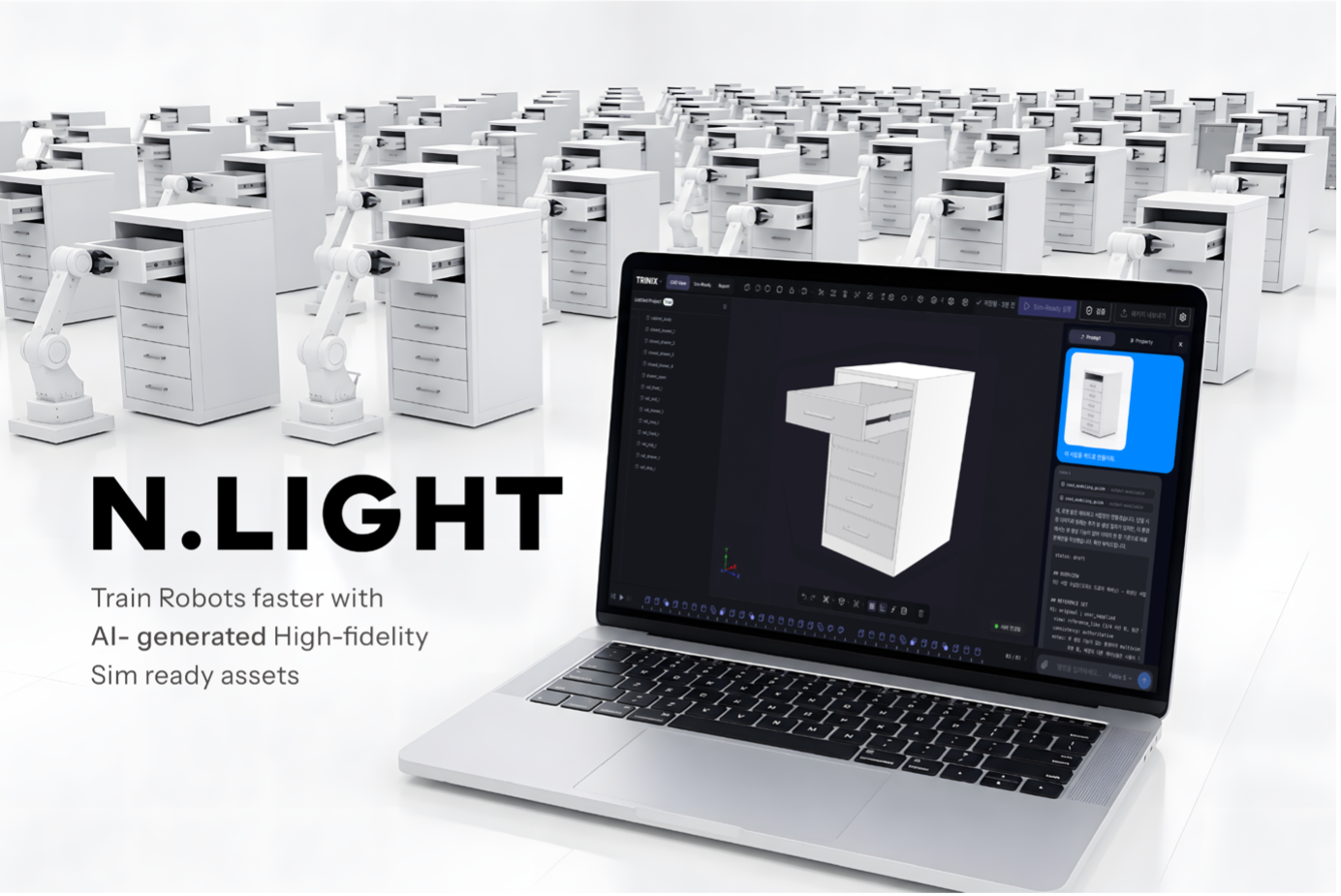
NdotLight (엔닷라이트), a South Korea-based 3D AI company, unveiled its SimReady (Simulation-Ready) asset...
The AMW Read
Incremental product launch by a known small player; segment-wide significance as it addresses the asset-bottleneck in physical AI simulation pipelines, but does not resolve an open debate or introduce a new top-tier entrant.

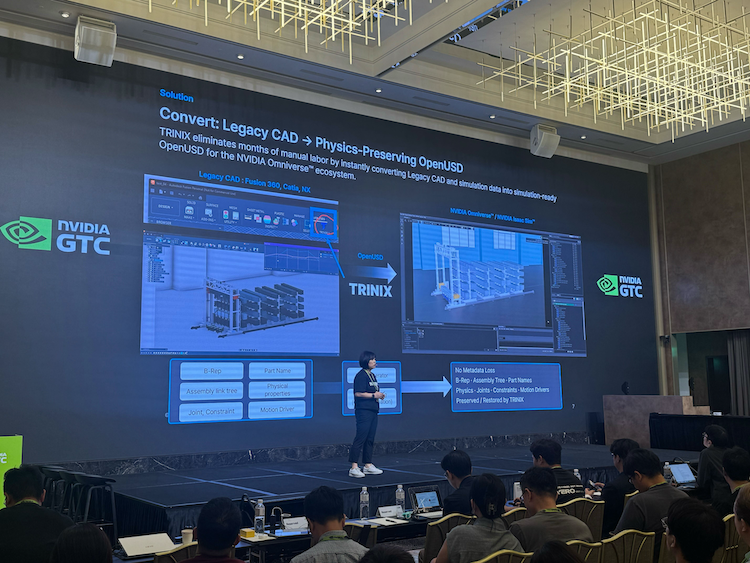
NdotLight (엔닷라이트), a South Korea-based 3D AI company, unveiled its SimReady (Simulation-Ready) asset generation technology at the NVIDIA Startup Day event during Computex 2026 in Taipei. The company demonstrated its proprietary AI solution TRINIX, which converts text, images, and existing CAD data into physics-enriched 3D assets for robotic and physical AI training. The demo included a live simulation of power and LAN cable connection processes as well as rigid-body and soft-body deformation — a notoriously difficult category of deformable materials for simulation environments. NdotLight is listed on the NVIDIA Partner Ecosystem roster, and integrates directly with NVIDIA Isaac Sim and other simulation platforms.
Why it matters: NdotLight is addressing a well-documented bottleneck in the physical AI stack — the scarcity of high-quality, simulation-ready 3D assets that encode real physical properties (mass, friction, joint articulation, material deformation). This places the company squarely within the "context-engineering moat" pattern observed across the AI infrastructure layer: just as foundation-model labs need curated training data, robotics and physical AI systems need curated simulation environments. NdotLight's TRINIX engine automates what has historically been manual, expensive CAD-to-simulation workflow, lowering the barrier for manufacturing, digital twin, and robotics firms to build the training grounds for their models. The timing — immediately following Jensen Huang's Computex keynote emphasizing physical AI — signals that the ecosystem bottleneck is shifting from simulation engines themselves to the asset pipeline that feeds them.
Grounded expert take: CEO Park Jin-young positioned the company as infrastructure, not application — building the connector layer between 3D data sources and simulation environments. If NdotLight can win distribution via the NVIDIA ecosystem, it could establish an "acqui-licensing"-style moat by embedding its conversion pipeline into Isaac Sim. The early focus on articulated and deformable objects (cables, wires, soft bodies) suggests the company is prioritizing the hardest simulation problems first — a defensible wedge into physical AI infrastructure. For enterprise robotics and digital twin buyers evaluating simulation stacks, NdotLight's technology reduces a key hidden cost: the months of engineering time needed to create realistic asset libraries for training and validation.
#PhysicalAI #SimulationAssets #NVIDIAEcosystem #RoboticsInfrastructure #DigitalTwin #3DAI