Liner Raises 50 Billion Won ($36M) Series C Led by LB Investment
The AMW Read
Incremental Series C for an already-tracked Korean AI agent player, well under the mega-round threshold, extending a known domestic capital-and-partnership pattern rather than resolving a debate or introducing a new top-tier entrant.

Liner Raises 50 Billion Won ($36M) Series C Led by LB Investment
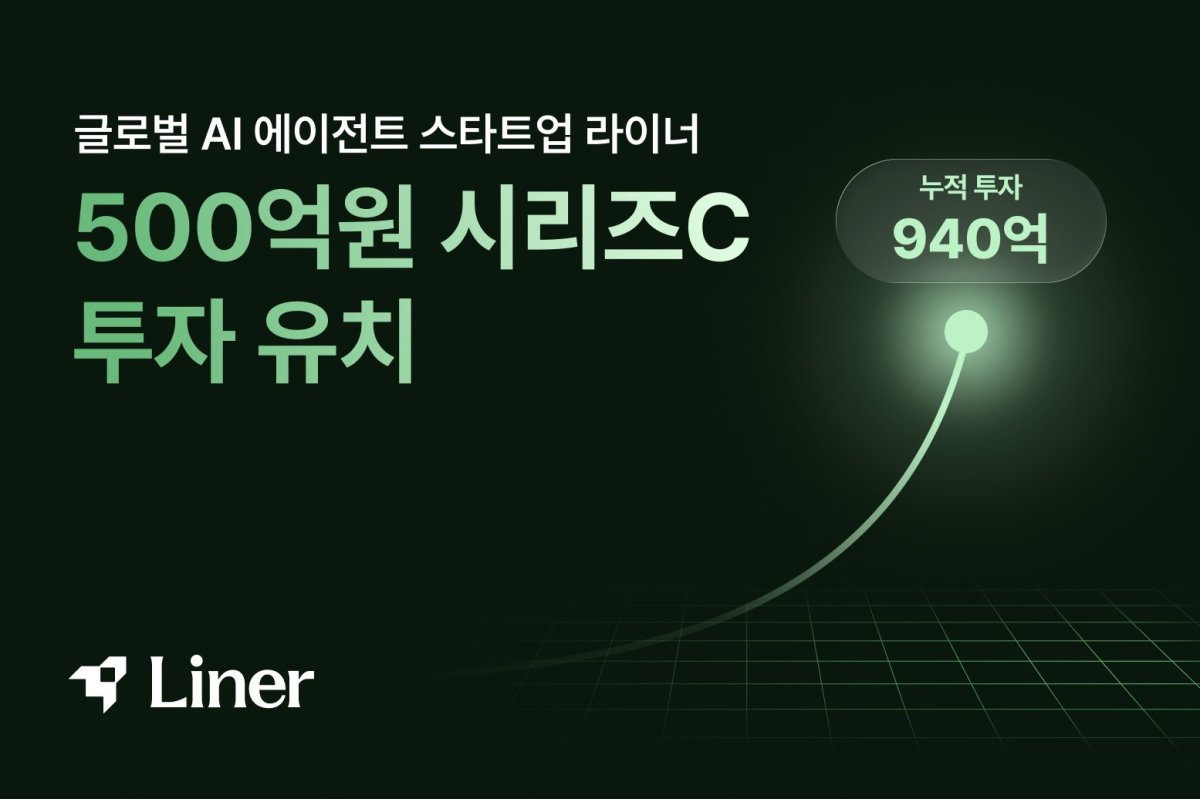
Korean AI agent and search startup Liner has closed a Series C round of 50 billion won (roughly $36M), led by LB Investment, about one year and ten months after its previous round. Existing backers Atinum Investment and CJ Investment joined the follow-on, alongside new investors KDB (Korea Development Bank), Helios Private Equity, KB Securities, Daishin Securities, and STIC Ventures. Liner's cumulative funding now stands at roughly 94 billion won (about $68M).
Liner has spent recent years building an AI search-and-agent product positioned on information accuracy over breadth, and this round follows five days after the company disclosed a partnership pairing its agent stack with domestic chipmaker Rebellions' NPUs for public-sector and Saudi deployments. Per the AI Market Watch index, coverage of Liner in the last two 90-day windows has been steady at one pipeline-matched item each — a name-matched, pipeline-limited count, but consistent with a company moving quickly from a product story to an infrastructure-and-capital story. LB Investment's framing — that Liner can stand alongside global tech companies in AI search and agents — signals confidence, but also that Liner is still explicitly benchmarking itself against, rather than matching, that tier.
For builders, Liner's stated plan to spend the capital on R&D and on porting agent technology it says is "already proven overseas" into a Korea-optimized consumer product, alongside a push into enterprise AI-transformation (AX) contracts domestically and abroad, suggests B2B distribution is the nearer-term revenue path even as the consumer product stays live. For investors, a state development bank and multiple securities firms joining as new backers signals that Korean AI agent startups are starting to pull in institutional capital beyond traditional VC, which could lower the bar for follow-on rounds across the sector.