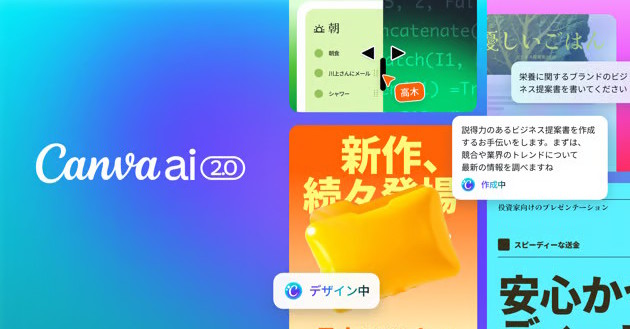
Canva released Canva Code 2.0, an AI coding tool that enables users to build websites and interactiv...
The AMW Read
Product update for an existing player; segment-level significance as Canva uses its massive distribution to contest AI coding from the no-code side.

Canva released Canva Code 2.0, an AI coding tool that enables users to build websites and interactive applications from text prompts. The feature is now available to all users, including free-tier accounts, expanding the company's platform beyond traditional graphic design into AI-assisted web development.
Why it matters: Canva Code 2.0 extends the company's hyperscaler-distribution moat — the ability to embed increasingly powerful AI capabilities into a low-friction, freemium product used by hundreds of millions. By offering AI coding to free accounts, Canva is effectively commoditizing basic web development, applying the same "design for everyone" playbook that made it a $40B+ design platform. This move intensifies competition in the AI-assisted coding space, traditionally dominated by developer-first tools like Cursor and GitHub Copilot, but now being contested from the no-code side by Canva's massive consumer base.
Expert take: Canva's strategy mirrors the acqui-licensing pattern seen across the AI stack: wrap frontier-model capabilities into a familiar UI and give away the basic tier to capture usage data and brand loyalty. The real competitive signal is not the technology itself, but the distribution — free access to a product that previously required paid plans. This could pressure pure-play AI coding startups to either differentiate on enterprise features or lower their own free tiers to protect their user acquisition funnel.