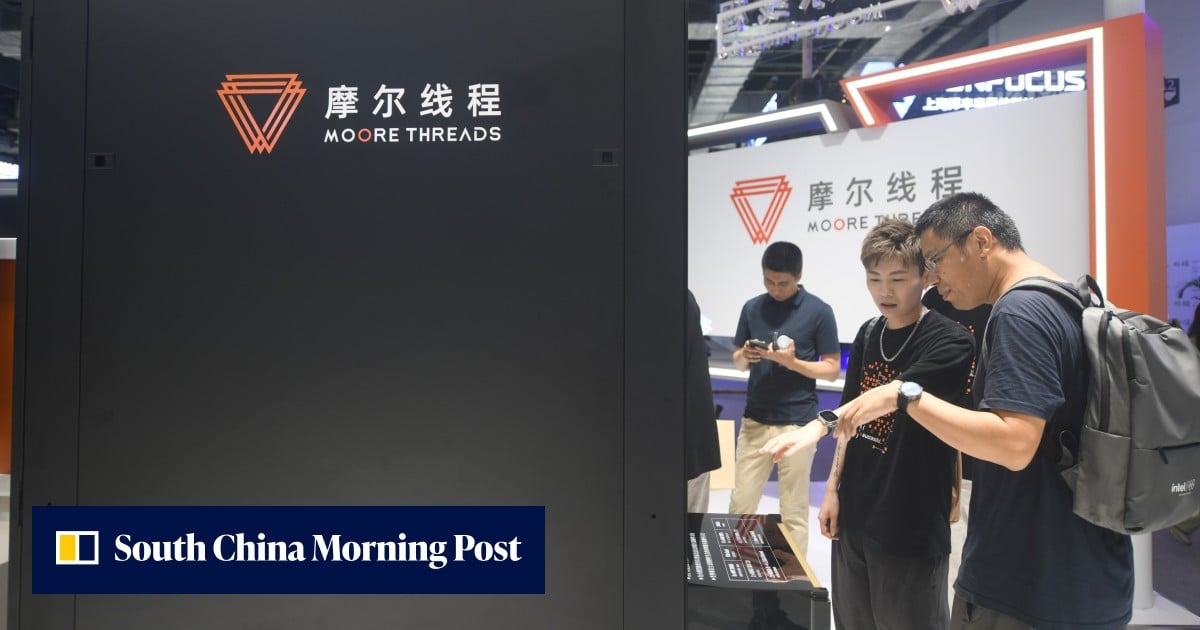
Chinese AI chip developer Moore Threads (摩尔线程) reported a 147% jump in first-half revenue to 1.7 bil...
The AMW Read
Dual-listing plan updates a known player decisively, and the Hong Kong capital raise plus export-control context justify cross-capital and cross-geopolitics refs.

Chinese AI chip developer Moore Threads (摩尔线程) reported a 147% jump in first-half revenue to 1.7 billion yuan (US$252 million) and said its board approved a plan to issue H shares and list on the Hong Kong Stock Exchange's main board. The company, which went public on Shanghai's Star Market in December, framed the Hong Kong listing as a way to deepen its "international strategic footprint," attract and retain talent, and enhance corporate governance and competitiveness. Its net loss narrowed sharply to 11.6 million yuan from 271 million yuan a year earlier.
The move underscores how China's domestic GPU makers are scaling into a more mature capital phase even as U.S. export controls limit their access to advanced chipmaking tools and cut them off from Nvidia's latest accelerators. Moore Threads, often dubbed one of China's "little Nvidias," has been building a full-stack software ecosystem to rival Nvidia's CUDA dominance — most recently releasing MusaCoder, claimed as the first domestic GPU to support the full LLM training chain. A Hong Kong listing would give the company access to international capital and a strategic presence outside mainland China at a moment when home-grown compute demand is booming.
For investors and enterprise buyers, the dual-listing plan signals that China's domestic AI silicon players are moving beyond survival mode into scale-up competition. The narrowing loss trajectory and revenue acceleration suggest Moore Threads is converting export-restriction tailwinds into commercial traction, particularly among Chinese enterprises and government-linked buyers seeking alternatives to Nvidia. Watch whether the Hong Kong listing proceeds smoothly and how proceeds are allocated — GPU capacity expansion versus software ecosystem investment will determine whether Moore Threads can defend its position against other domestic challengers like Cambricon and Huawei's Ascend line.
