DeepBrain AI ships Persona XR AI Human SDK for Unity-based museum guides
The AMW Read
Incremental product extension of a known generative-media avatar player into Unity XR tooling; meaningful for the avatar/NPC sub-niche but not a segment-level structural shift.

DeepBrain AI ships Persona XR AI Human SDK for Unity-based museum guides
DeepBrain AI said it has completed the Persona XR AI Human software development kit, a Unity plugin that embeds conversational 3D AI human NPCs into XR exhibition and metaverse content. After recognizing a visitor’s question, the stack generates role- and context-aware replies via a large language model, then drives real-time speech with the company’s high-speed text-to-speech, phoneme-level lip sync, gestures, and facial expression. Creators can configure gender, appearance, voice, personality, and the underlying response model; emotion recognition from speech, face, and wording is meant to keep character consistency across changing dialogue. The SDK targets Windows, macOS, and Android mobile XR devices and was built under a Korea Creative Content Agency–backed R&D program led by Yonsei University with Hanyang University, Hankuk University of Foreign Studies, NineFive, and Stoic Entertainment. DeepBrain AI plans to sell domain templates and UX evaluation services to museum, education, tourism, and public-guide XR makers.
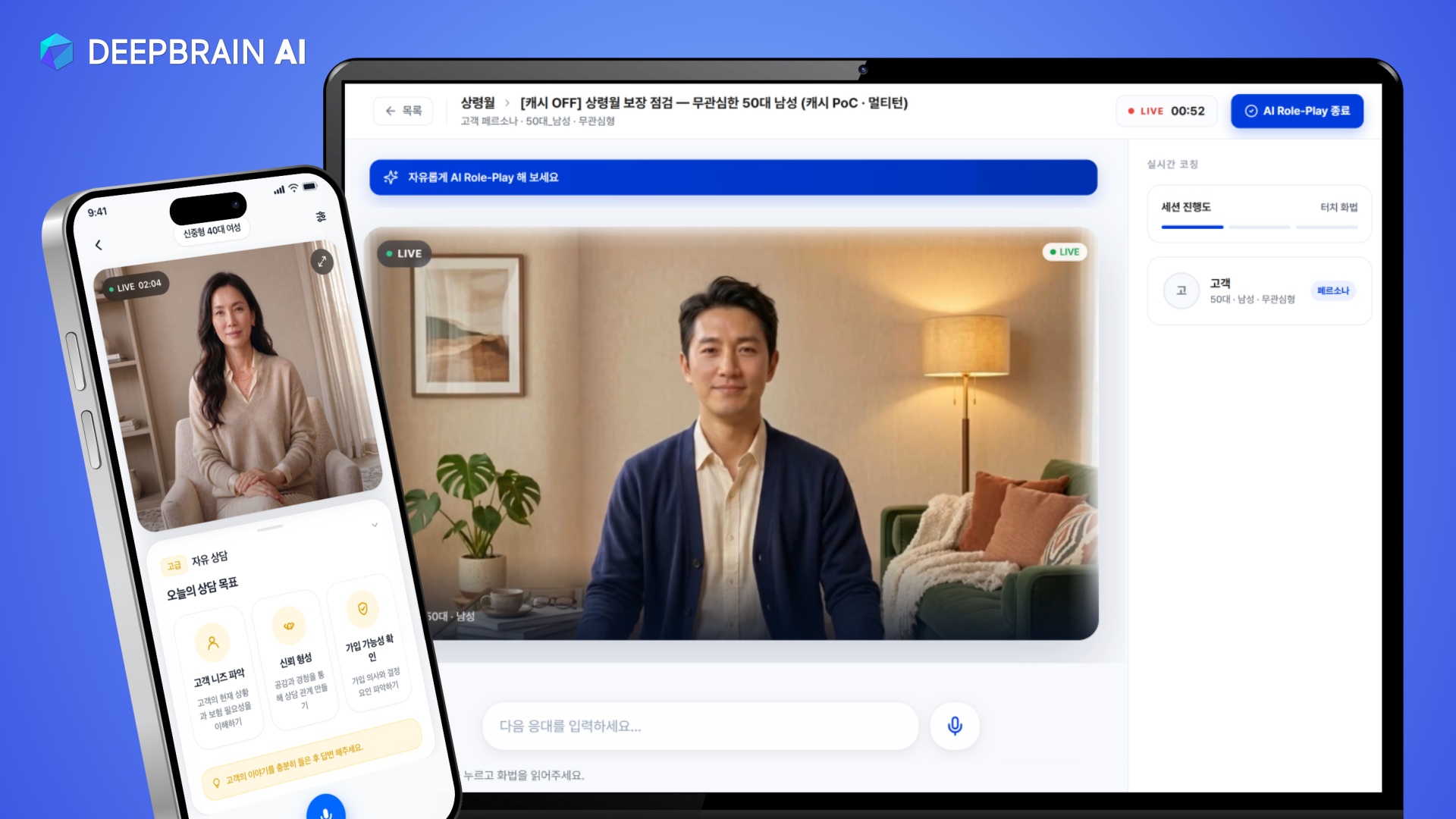
The move extends the same AI Human surface the company has been pushing into corporate training—role-play sales coaching and interactive video—into a creator-facing XR tooling layer rather than another end-user vertical app. In multimodal media, distribution often hinges on who owns the authoring surface; a Unity-native avatar NPC SDK is a bid to sit inside exhibition and edtech content pipelines where fixed-script guides fail on context and responsiveness. Per the AI Market Watch index, DeepBrain AI is a 2016-founded media and entertainment AI firm with about $55.8M in total funding tracked across the ~5,000-company coverage set—enough scale to productize avatar IP as infrastructure for XR studios, not only as finished video.
Builders should treat replaceable response models and scene-trained character controls as the real product bet: museums and educators will care less about novelty avatars than about persona drift, latency on mobile XR, and measurable visitor UX. Investors watching generative-media tooling should ask whether SDK adoption in Korean public and cultural projects converts into recurring seats outside grant-funded pilots.