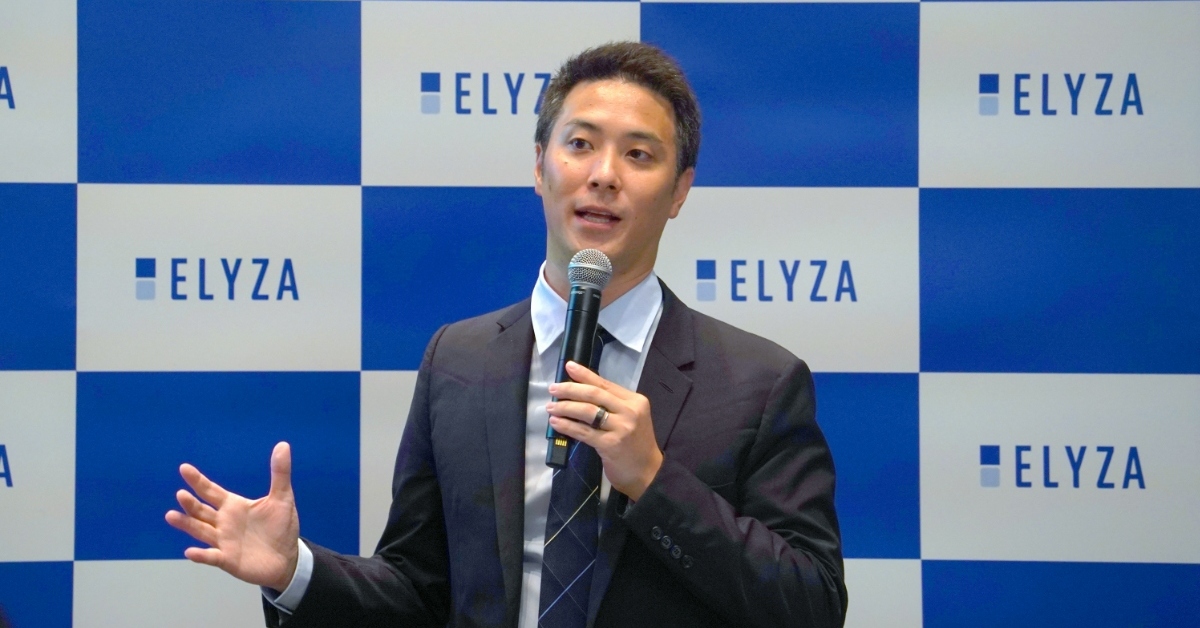
ELYZA CEO links faster model releases to AI-assisted research and development
The AMW Read
ELYZA adds detail to its AI-development research direction, but narrowly reported task gains and executive commentary do not establish a broader capability breakthrough.

ELYZA CEO links faster model releases to AI-assisted research and development
ELYZA, the KDDI-group AI developer, announced ELYZA RSI Research on October 2 to pursue recursive self-improvement: AI contributing to the development of AI itself. In an ITmedia interview published October 6, its CEO argued that AI-assisted development is accelerating frontier labs' improvement cycles, with new models arriving monthly rather than roughly every three months through 2025. ELYZA also reported that its research improved task completion from 47% to 61% in an inquiry-response setting and reduced inference costs by 67% while maintaining performance.
The market significance lies in whether AI can improve the economics and speed of model development, beyond automating downstream applications. ELYZA's CEO described simple tasks such as summarization as increasingly similar across models, while identifying scientific research and longer, more complex autonomous tasks as areas of continuing competition. This positions ELYZA within the foundation-model market's search for differentiation through research methods and development efficiency. The reported task and cost improvements are specific results; they do not establish that AI can sustain an autonomous cycle of improving its own capabilities.
Builders and investors should distinguish measurable workflow gains from evidence of recursive self-improvement. Our October 2 coverage of ELYZA's Japanese-language model releases noted the company's clarification that its research had not achieved RSI. The interview extends that research direction without demonstrating that the threshold has been crossed. For adoption decisions, the concrete questions are which tasks improved, how performance was evaluated, and whether the cost savings hold outside the tested setting.