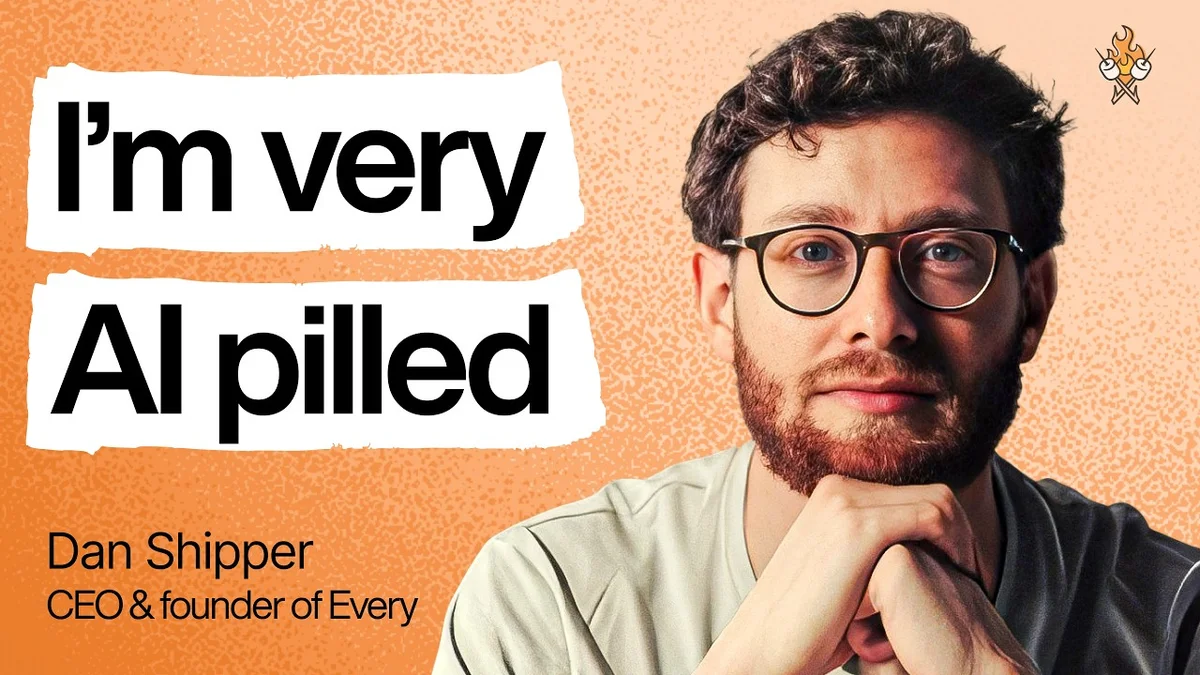
EVERY CEO Dan Shipper argues AI automation paradox will create more human work, not less
The AMW Read
Incremental commentary from a known agent-company CEO; reinforces existing industry discourse without introducing new data, players, or structural shifts.

EVERY CEO Dan Shipper argues AI automation paradox will create more human work, not less
Dan Shipper, CEO and founder of EVERY, shared predictions on the AI paradox in a recent Lenny's Podcast appearance, arguing that increased automation through AI agents will lead to more human work, not less. He foresees two parallel futures: every team will have at least one AI agent accessible via platforms like Slack (already implemented at Shopify and Ramp), and AI will become deeply embedded into operating systems and everyday tools—moving beyond standalone coding assistants toward invisible integration within email clients and document editors. Shipper highlighted tools like Codex and Co-work as early examples of this trajectory.
The conversation updates a recurring structural pattern in the AI industry: the "automation creates demand" cycle, where removing friction from a task increases the volume of work people attempt. This runs counter to the simpler narrative that AI eliminates jobs. Shipper's framing suggests that AI agents will require significant human oversight, context engineering, and collaboration—keeping knowledge workers central to the process even as routine tasks become automated. The prediction also echoes the broader shift from AI as a separate application to AI as an embedded OS-level capability, which has implications for how software companies design products and how enterprises evaluate adoption.
Shipper's stance is notable because it comes from the CEO of a company that builds AI coworker tools, yet he explicitly warns against overestimating AI independence. His emphasis on human-in-the-loop collaboration reinforces the current industry consensus that the most valuable AI deployments are those that augment rather than replace. If his prediction holds, the market for agent-orchestration, prompt management, and human-AI workflow tools could grow significantly, while the pitch that AI will fully automate away white-collar roles may remain aspirational rather than imminent.