FuriosaAI partners with Broadcom to build 2nm AI inference chip for agentic workloads
The AMW Read
FuriosaAI is a known entrant in AI inference silicon, but the Broadcom partnership at 2nm node meaningfully updates its competitive positioning and validates an ASIC-vs-GPU inference debate at segment level.

FuriosaAI partners with Broadcom to build 2nm AI inference chip for agentic workloads
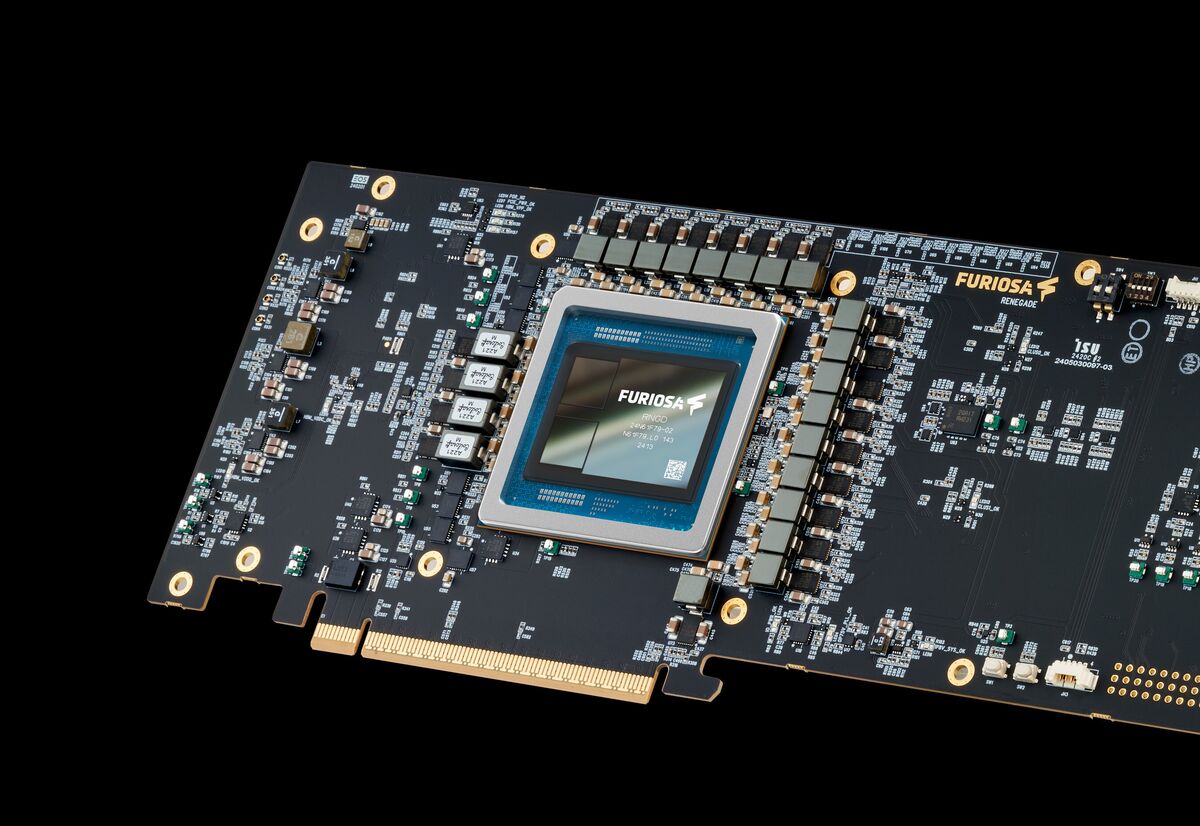
South Korean AI chip startup FuriosaAI has announced a partnership with Broadcom to develop a next-generation AI inference platform targeting large-scale agentic AI deployments. The collaboration, reported by DIGITIMES Asia, centers on designing a 2nm AI inference chip optimized for reasoning workloads and high-volume inference — a bet that agentic computing will demand purpose-built silicon rather than repurposed training hardware. FuriosaAI, which previously turned down acquisition interest from Meta, continues to chart an independent path focused on energy-efficient neural processing units (NPUs).
Why it matters: This partnership signals a structural shift in the AI chip landscape as inference becomes the dominant compute cost. FuriosaAI’s decision to co-develop with Broadcom — rather than build a full-stack product alone — mirrors the “hyperscaler distribution moat” pattern increasingly seen in chip startups. Broadcom’s ASIC design ecosystem and foundry relationships (including access to 2nm process technology) give FuriosaAI a path to volume without the capital burden of owning fabrication. If successful, this could validate the thesis that specialized inference silicon built through partnership, not vertical integration, is the winning architecture for the agentic computing era.
The partnership also updates an open debate in the AI infrastructure segment: whether incumbent general-purpose GPU suppliers (Nvidia) or ASIC specialists (Broadcom, Marvell) will capture the inference long tail. FuriosaAI’s 2nm NPU, paired with Broadcom’s IP and packaging expertise, directly challenges the assumption that inference at scale requires Nvidia’s CUDA ecosystem. With agentic AI driving orders-of-magnitude more inference calls per task than traditional chat-based AI, the efficiency gains from a purpose-built 2nm chip could tilt enterprise procurement toward alternatives — provided the software stack can deliver competitive utilization rates.