**FuriosaAI receives ~$830M from South Korea government advanced industry fund**
The AMW Read
The funding is large but follows a known pattern (sovereign-backed AI chip challenger); the event updates the player map and signals capital-cycle momentum but is not structurally novel.

**FuriosaAI receives ~$830M from South Korea government advanced industry fund**
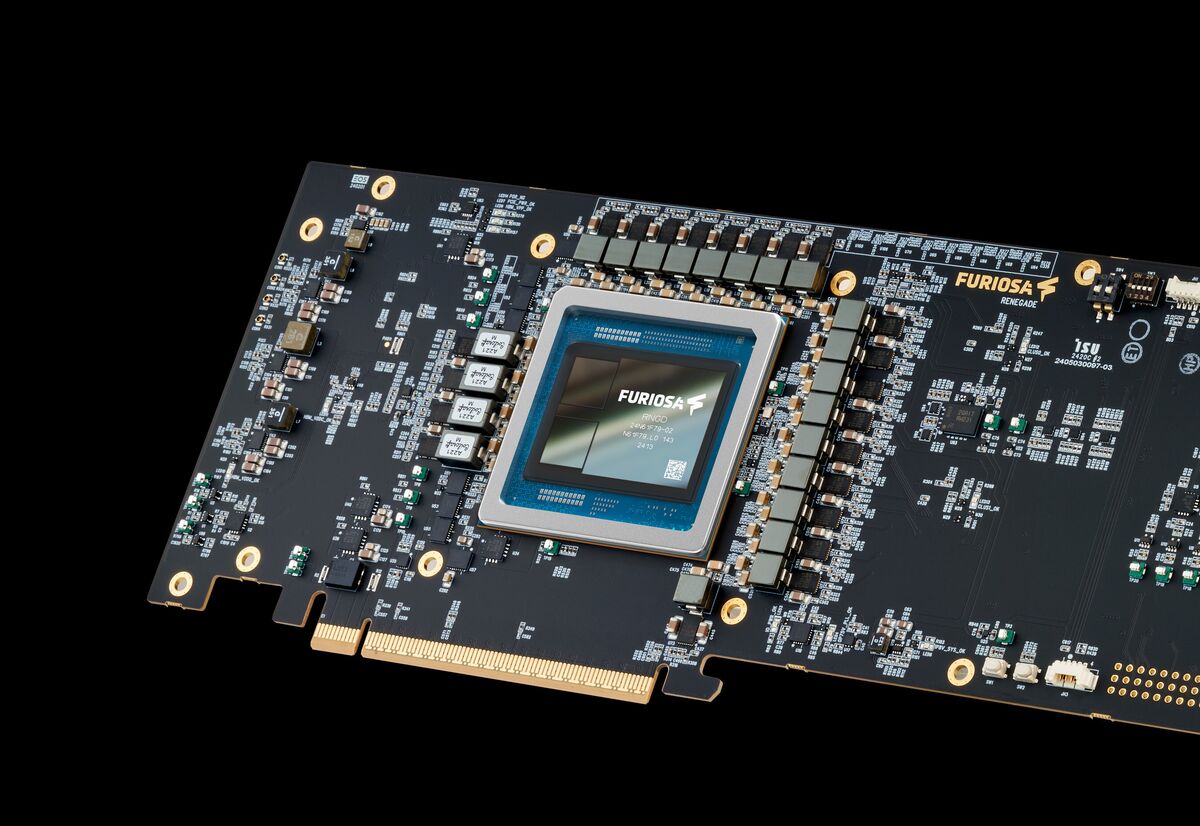
South Korean AI chip startup FuriosaAI has secured approximately 830 billion won (~$830 million) in investment from the South Korean government's advanced industry development fund, finalized in May 2026. The company, led by CEO Baek Jun-ho (백준호), develops inference-optimized semiconductors for AI workloads, positioning its chips as more power-efficient alternatives to Nvidia's dominant data-center products. As a fabless firm, FuriosaAI works with TSMC for manufacturing.
Why it matters: This capital injection follows a familiar pattern in the AI semiconductor substrate — sovereign-backed financing of domestic challengers to Nvidia's hyperscaler-distribution moat. South Korea joins China (through firms like Cambricon and Enflame) and Europe (through projects like the European Processor Initiative) in using state capital to fund alternative AI silicon. The Korean government's move places FuriosaAI inside a broader geopolitical push to create non-Nvidia inference capacity, though the startup must still overcome the massive software-ecosystem moat (CUDA, Triton, and the surrounding stack) that locks most AI workloads onto Nvidia hardware.
Grounded expert take: FuriosaAI's specialization in inference — rather than training — computation is a deliberate strategic choice that aligns with a structural shift in the industry. As AI deployment scales, inference workloads increasingly dominate total compute demand, creating an opening for purpose-built, lower-power chips. However, the company's path to enterprise adoption is steep: even with government backing, it must persuade cloud providers and large enterprises to integrate an unfamiliar chip into their deployment pipelines, confronting the same ecosystem lock-in that has defeated past Nvidia challengers.