iHW partners with Qunion and Quniworks on sub-1W defense AI modules
The AMW Read
The partnership incrementally extends iHW's edge-chip commercialization into defense, with analog in-memory hardware central to the story but deployment impact contingent on planned verification.

iHW partners with Qunion and Quniworks on sub-1W defense AI modules
iHW signed an MOU with defense contractor Qunion and embedded AI platform company Quniworks on October 6 to jointly develop and commercialize low-power defense AI technology. iHW will supply its INFERTRON semiconductor, software, and development tools; Quniworks will develop AI models and integrate embedded platforms; Qunion will handle modularization, weapon-system integration, and environmental testing. Target applications include small UAVs, disposable drones, and soldier-worn equipment. The agreement covers joint R&D, demonstrations, and identification of government research projects.
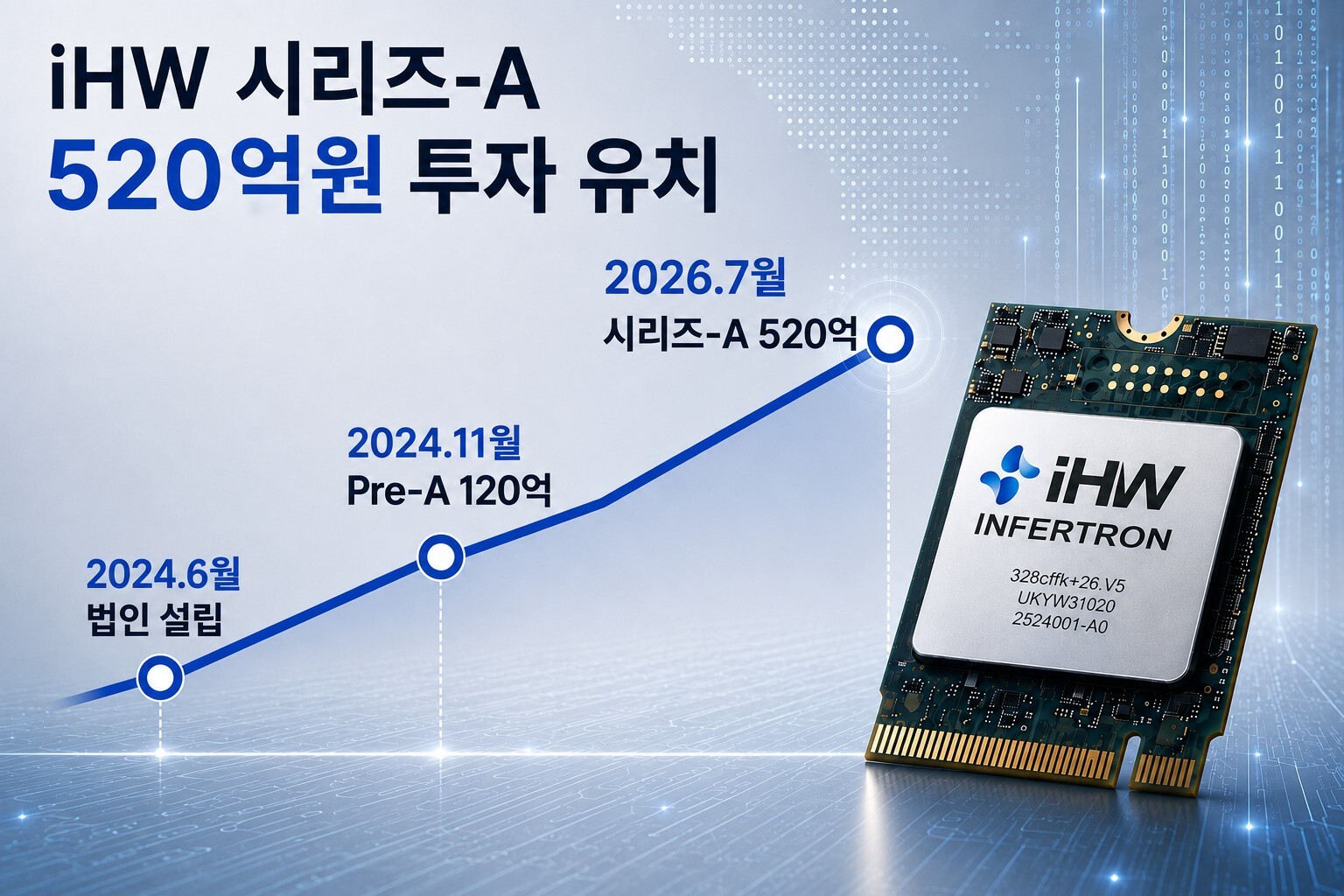
The partnership brings an alternative inference architecture into a market where battery capacity, heat, and payload space constrain deployment. INFERTRON uses analog in-memory computing to reduce movement of model weights between memory and processing units. iHW says the chip can run vision models below 1W without external DRAM or separate flash memory and is designed for a 28–40nm manufacturing process. For AI infrastructure suppliers, this makes power efficiency and integration requirements central to competition alongside computational performance. The announcement extends iHW's previously reported Series A push into edge applications toward defense, but provides no independent performance results or completed defense qualification.
For builders and investors, the next concrete checkpoint is a demonstrated module under representative operating conditions. Qunion's integration and environmental-verification role creates a route to test whether the chip's stated advantages translate into usable equipment. Evaluation should distinguish chip-level consumption from total module power and examine model accuracy, latency, and reliability together. An MOU establishes responsibilities; procurement readiness still depends on the planned testing and demonstrations.