Hyades Raises $910K Seed for AI Platform That Fuses Satellite, Drone, and Radar Data
The AMW Read
Novelty 1: incremental pre-seed to a new entrant in the multimodal/geospatial segment; Significance 1: potential impact limited to sub-segment of enterprise AI for spatial data, no structural shift.

Hyades Raises $910K Seed for AI Platform That Fuses Satellite, Drone, and Radar Data
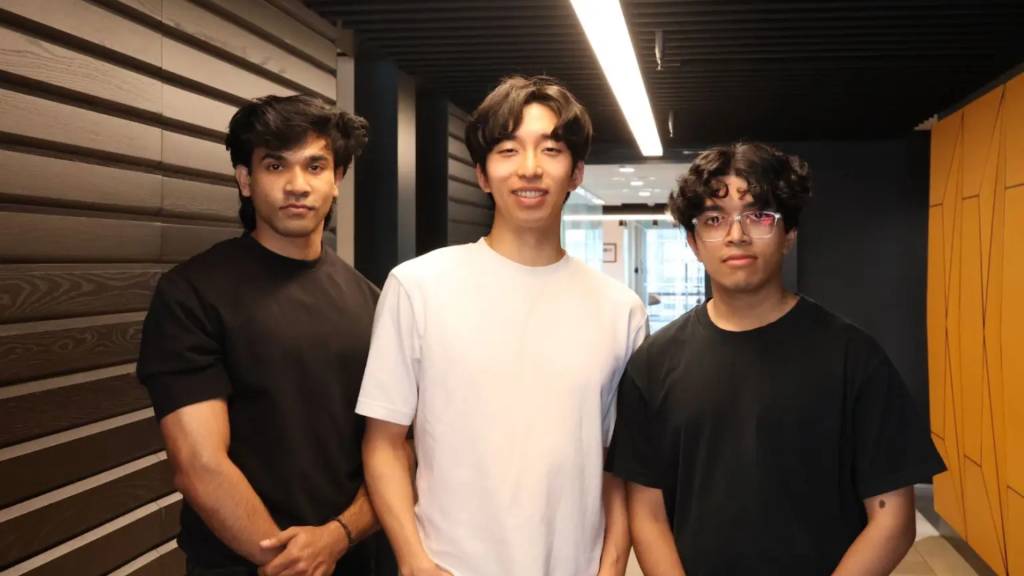
Auckland-based startup Hyades has raised a NZ$1.1 million (~AU$990,000) pre-seed round led by Icehouse Ventures, with participation from K1W1 and angel investors Tony Falkenstein and Tim Brown, to build an AI platform that ingests geospatial data from satellite imagery, drone footage, radar, and flood records into unified models for enterprise risk assessment. The company, founded by University of Auckland graduates Ashin Alex, Sam Kurian, and Jimin Seo, is still in early alpha and plans to use the capital to hire AI engineering talent and secure enterprise co-design partners.
Why it matters: Hyades sits at the intersection of two structural forces in the AI industry — the fragmentation of spatial data into siloed, non-text formats that large language models cannot natively process, and the rising demand from insurers, miners, and agricultural firms for climate- and weather-risk models that can ingest multiple data modalities. The startup is attempting to solve a context-engineering problem (how to fuse high-dimensional, non-textual data into a single representation), which is a recurring pattern in the enterprise AI substrate where legacy industries have messy, multi-format data that LLMs alone cannot handle. If Hyades can reduce the manual labor of collating flood records, satellite imagery, and radar into a single risk model, it could become a wedge into the insurance and climate analytics verticals, segments where data fragmentation is a known barrier to AI adoption.
Grounded expert take: The pre-seed size is modest and the platform is at alpha stage, so this is an early bet on the founding team's ability to execute on a hard data-integration problem rather than a validation of product-market fit. Icehouse Ventures' principal Bex Gidall explicitly framed the thesis around the team's complementary strengths — a founder who can articulate vision, a technical co-founder whose work compares well against the field, and a COO who can translate complex tech — which is a classic early-stage venture pattern. The key risk is whether the platform can generalise beyond the insurance use case (flood risk) into the broader mining, agriculture, and climate-science verticals the company names, as each vertical has distinct data formats, regulatory constraints, and buyer workflows. The $400,000 New to R&D government grant is a small but signal-validating vote from New Zealand's innovation agency.