Kleon Launches RoleFit Studio for Sales and Interview Practice With AI Digital Humans
The AMW Read
RoleFit Studio extends Kleon's digital-human offering into self-service enterprise roleplay, an incremental product update whose training effectiveness and adoption remain unquantified.

Kleon Launches RoleFit Studio for Sales and Interview Practice With AI Digital Humans
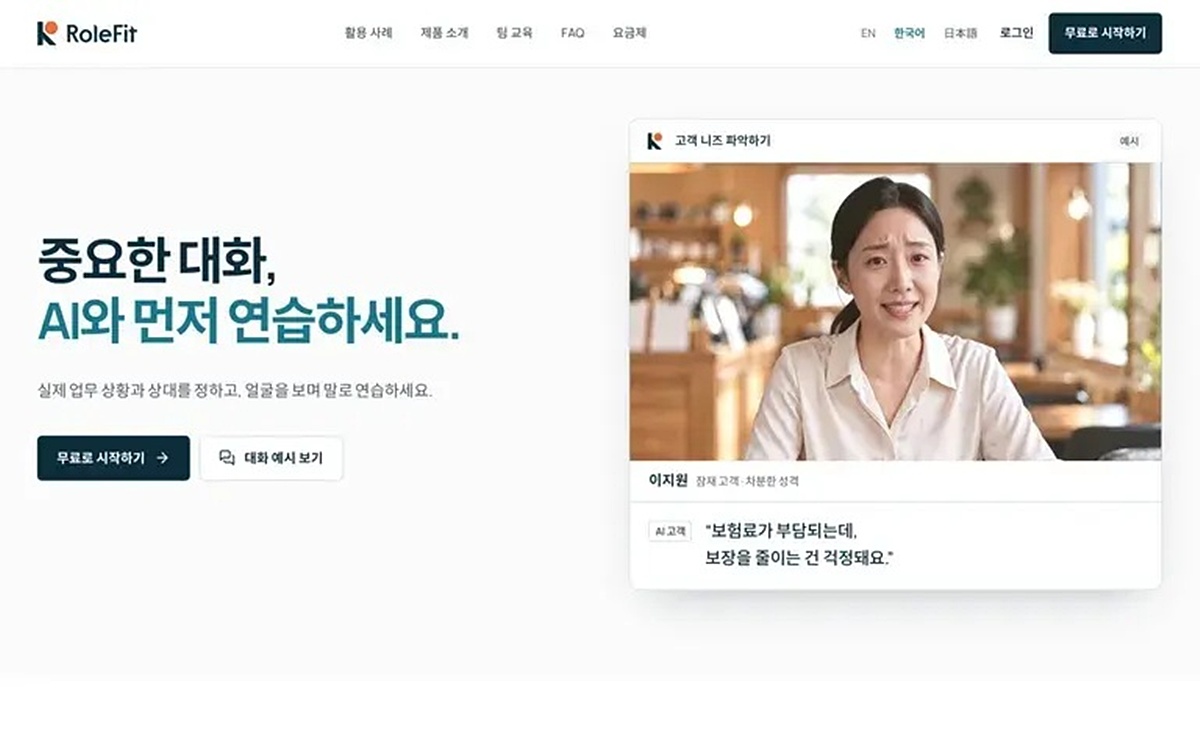
Kleon has launched RoleFit Studio, a web platform that lets corporate training managers create and distribute conversation exercises without development work. Managers define the scenario, training objective, and AI counterpart's role, personality, attitude, and reference information. Employees access exercises through a link on a PC or smartphone, practicing responses to changing reactions rather than memorizing model answers. Kleon lists insurance consultations, automotive sales, financial advisory conversations, pharmaceutical sales, retail service, interviews, and leadership feedback among its applications.
The launch puts Kleon's generative-media technology inside an enterprise training workflow. Its digital humans respond with synchronized lip movements, expressions, and facial motion; Kleon says these nonverbal cues offer greater immersion than text chatbots or voice AI. The market question is whether that visual layer improves learning enough to distinguish the product from simpler conversational tools. The platform also removes the need to recruit and schedule human roleplayers, giving the launch a concrete operational proposition beyond avatar realism.
For builders and investors, the key test is whether repeatable roleplay translates into better workplace conversations. The report provides no learning-outcome measurements, customer adoption figures, or pricing, so immersion should remain a product claim rather than evidence of training effectiveness. Kleon is launching with self-service registration and plans tailored enterprise deployments around each organization's training objectives and workflows. That creates a clear commercial test: whether an accessible scenario builder can lead to broader organizational use.