Lablup extends AI infrastructure management to model routing and token costs
The AMW Read
The showcase incrementally extends Lablup's previously presented multi-model operations offering with a local metering demonstration, but provides no measured savings or evidence of segment-wide impact.

Lablup extends AI infrastructure management to model routing and token costs
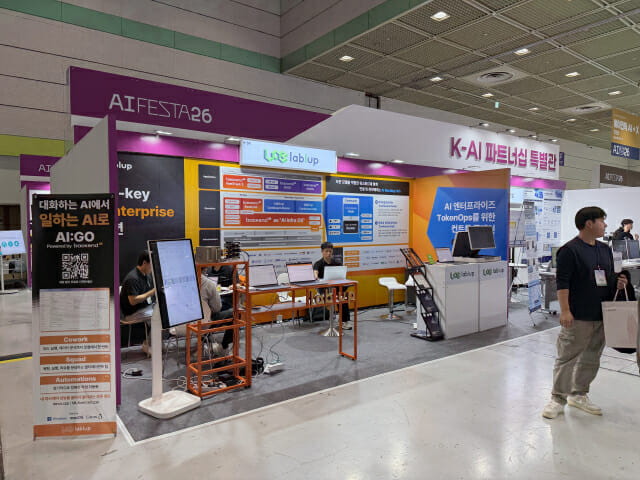
Lablup showcased Backend.AI and Continuum at AI Festa 26 in Seoul, expanding its infrastructure-management offering from GPU allocation to model routing, token usage tracking, and cost accounting. Backend.AI distributes GPU and accelerator resources among users and workloads. Continuum connects multiple AI models, routes requests, and provides visibility into model-level consumption and costs. The booth demonstrated a small model running locally with usage tracking, illustrating operation in an environment separated from external networks.
The expansion places Lablup further into the inference orchestration and observability layer, where enterprises must manage both computing resources and consumption across model services. GPU allocation addresses who can use infrastructure; token accounting addresses which models teams use and what those requests cost. Lablup describes routing lighter workloads to lighter models and demanding tasks to higher-performance models. This follows its September 30 presentation of Continuum Router and Hub; the current report adds a local deployment demonstration, without establishing measured cost savings or production reliability.
For enterprise builders, the concrete evaluation question is whether unified routing and accounting provide usable cost visibility across their actual deployment environments. Lablup's stated goal spans isolated networks, cloud, on-premises, and hybrid infrastructure. Buyers should test usage attribution and routing behavior against representative workloads before treating the platform as a cost-control solution: the demonstration establishes local metering, but the report supplies no quantified savings or comparative performance results.