NEURA Robotics launches 4NE1 Gen 4 humanoid and co-funds €17M TUM RoboGym near Munich
The AMW Read
An incremental update from a known European humanoid player: a new robot generation plus a co-funded data-generation facility, with no disclosed production volume or customers.

NEURA Robotics launches 4NE1 Gen 4 humanoid and co-funds €17M TUM RoboGym near Munich
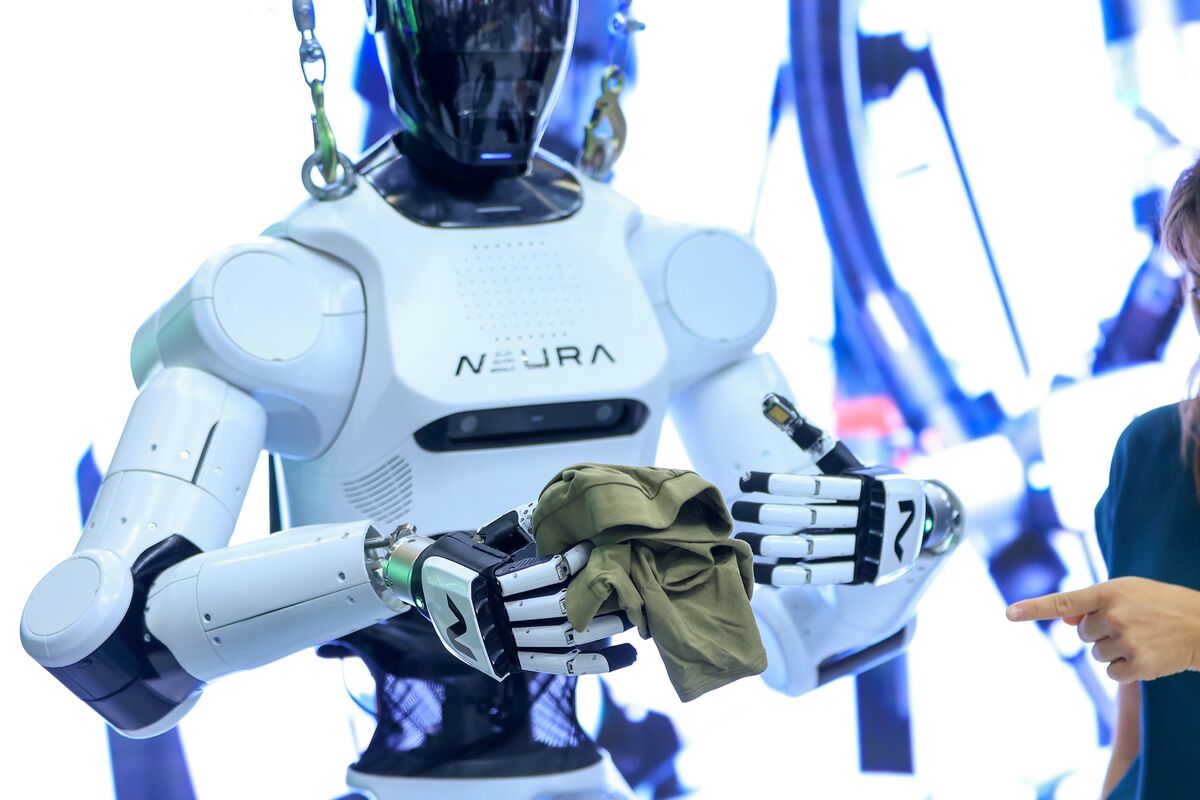
NEURA Robotics, the German robotics unicorn, has launched its 4NE1 Gen 4 humanoid robot, which it says is designed for series production. It also opened the TUM RoboGym at LabCampus near Munich Airport with the Technical University of Munich's Munich Institute of Robotics and Machine Intelligence (MIRMI). The facility covers more than 2,300 square meters and supports research across 10 industries, including automotive, pharmaceuticals, and logistics. The project has a total budget of 17 million euros, 11 million of it from NEURA, and an initial term of three years. The 4NE1 Gen 4 runs on Neuron AI, NEURA's foundation model, which learns from experience gathered in the gym.
The real news here is the training data. Embodied foundation models are limited by physical data, not by model architecture. The RoboGym generates data from real robot sensors, human demonstrations, and virtual simulation. In effect, it is a data factory NEURA controls, attached to a university and aimed at Mittelstand manufacturers who bring their own process knowledge. Days ago, NEURA partnered with NXAI to add xLSTM memory to its Physical AI stack. Together, the two moves show NEURA building its own model, memory, and data loop rather than renting a third-party robot foundation model. TUM's president also pitched the project as a statement about Germany as an industrial location, which places NEURA as the European alternative to US and Chinese humanoid makers.
For investors, the 11 million euros is small next to the 191 million euros NEURA has raised in total, per the AI Market Watch index (which tracks about 5,000 companies, not a census). The more telling plan is to open more gyms in Europe, the US, and China. If each site produces proprietary demonstration data from industrial partners, the gym network could become a real moat. That depends on Gen 4 actually reaching series production, and the article gives no units, customers, or pricing.