Panthalassa, a decade-old startup developing wave-powered GPU computing platforms, is raising $225 m...
The AMW Read
Second funding round in three months with ~2x valuation increase updates the segment player map, while the core proposition is about new compute infrastructure for AI, justifying the cross-compute ref.
Panthalassa, a decade-old startup developing wave-powered GPU computing platforms, is raising $225 million at a post-money valuation near $2 billion, according to two people familiar with the transaction. The round would double the company's valuation from roughly $1 billion set just three months ago, when it closed $140 million. VC firm 8090 Industries and South Korean investor Hanwha Asset Management, which participated in the May round, are expected to co-lead, with additional investors potentially joining, per a third-party source.
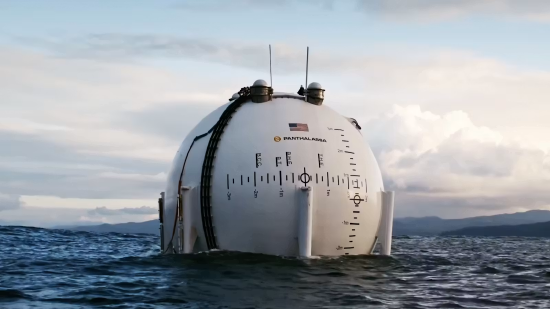
The company builds large floating platforms that capture wave kinetic energy, converting it to electricity to power onboard GPU clusters housed in underwater compartments. Seawater provides natural cooling, and AI inference results are relayed to shore via satellite. Panthalassa has positioned itself as an alternative to land-based data centers, citing more than 300 local and state-level construction bans or restrictions enacted in the U.S. since 2023. The model echoes Microsoft's Project Natick underwater data center test and a 24 MW offshore data center recently launched by a Chinese firm near Shanghai.
Backers include Kleiner Perkins chairman John Doerr, Peter Thiel's Founders Fund, Max Levchin's SciFi Ventures, and Figma CEO Dylan Field, who participated in the prior round. The company used that capital to build a manufacturing facility near Portland, Oregon. Panthalassa's funding surge parallels a broader wave of capital flowing into alternative energy sources for AI infrastructure, including Valar Atomics' $1 billion round led by Sequoia and Helion Energy's $465 million raise. For builders and investors, the key question is whether wave-powered, offshore compute can achieve the reliability and cost economics needed to serve sustained inference workloads, and whether regulatory relief onshore remains sufficient to justify the complexity.