OpenAI to Cut Off Model Supply to Cursor After SpaceX's $60B Acquisition
The AMW Read
OpenAI enforcing a change-of-control clause against a Musk-owned coding tool is a concrete new instance of a frontier lab using supply agreements as competitive leverage, updating both the Cursor and OpenAI case studies without overturning a prior claim.

Named counterparties: OpenAI, SpaceX
OpenAI to Cut Off Model Supply to Cursor After SpaceX's $60B Acquisition
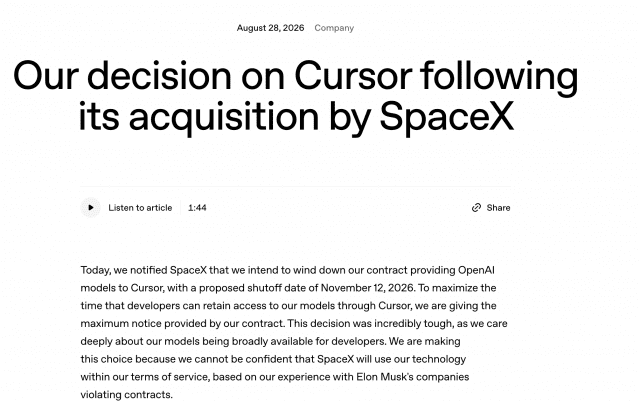
OpenAI told SpaceX on August 28 it will end Cursor's access to OpenAI models, citing a change-of-control clause triggered by SpaceX's $60 billion all-stock acquisition of Cursor developer Anysphere, completed August 14. Supply ends November 12, the maximum notice period allowed under the contract. OpenAI pointed to Musk-led companies' history of violating its terms — Twitter's breach after Musk's takeover, and Musk's own sworn admission this year that xAI did too — now compounded by xAI's February merger into SpaceX, renamed SpaceXAI in July. OpenAI said Cursor itself did not breach the deal. Cursor CEO Michael Truell said OpenAI models account for about 5% of current usage traffic and that the two companies are in talks to resolve it.
The clause turns what looked like neutral infrastructure into a contested boundary: owning a coding tool that other labs supply now exposes it to a rival lab's exit rights, regardless of the tool's own conduct. OpenAI was an early Cursor backer, with its Startup Fund leading Anysphere's $8 million seed round in 2023. The episode lands amid a sharp rise in Cursor coverage — 94 tracked items in the last 90 days versus 64 in the prior 90, per the AI Market Watch index (coverage of pipeline-ingested sources, not a census) — as the SpaceX deal keeps generating follow-on news since closing August 14.
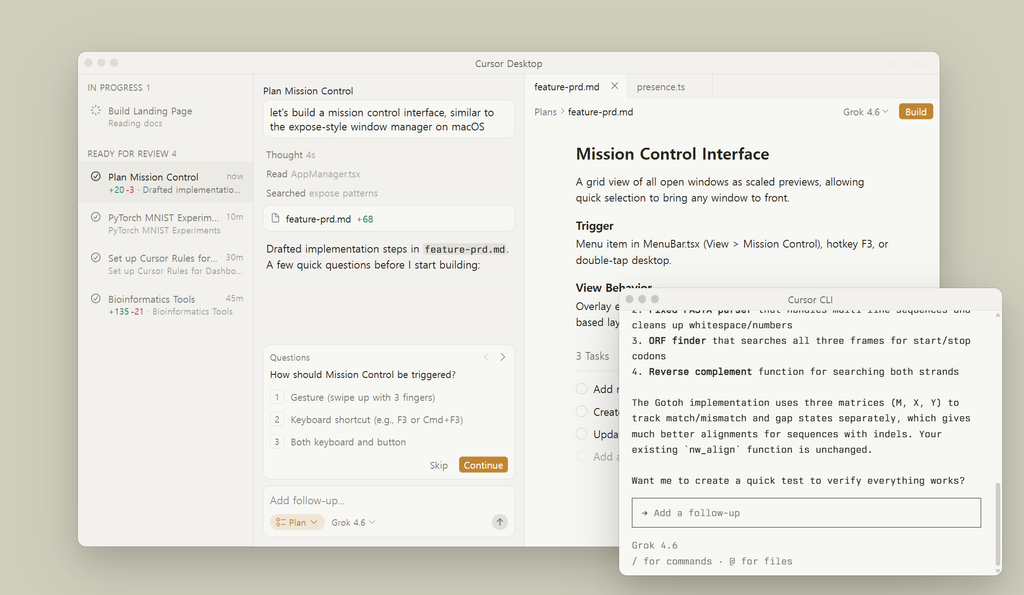
Practical exposure looks limited: Cursor's own Composer model, multi-model routing, and new SpaceX GPU access, plus the already-shipped Grok 4.6 collaboration, give it room to absorb the loss. The wider signal is that model-supply deals are no longer purely commercial — labs will enforce change-of-control clauses against a rival's ownership structure, raising the cost of vertical consolidation for any coding or agent platform that leans on more than one foundation lab.