Qualcomm unveils 'Dragonfly' brand for data center AI infrastructure at COMPUTEX 2026. At COMPUTEX 2...
The AMW Read
Qualcomm's entry into data center inference silicon is a meaningful update to the AI infrastructure player map (04.§2), though the company has attempted server chips before (Centriq). Scores reflect segment-level significance and moderate novelty.
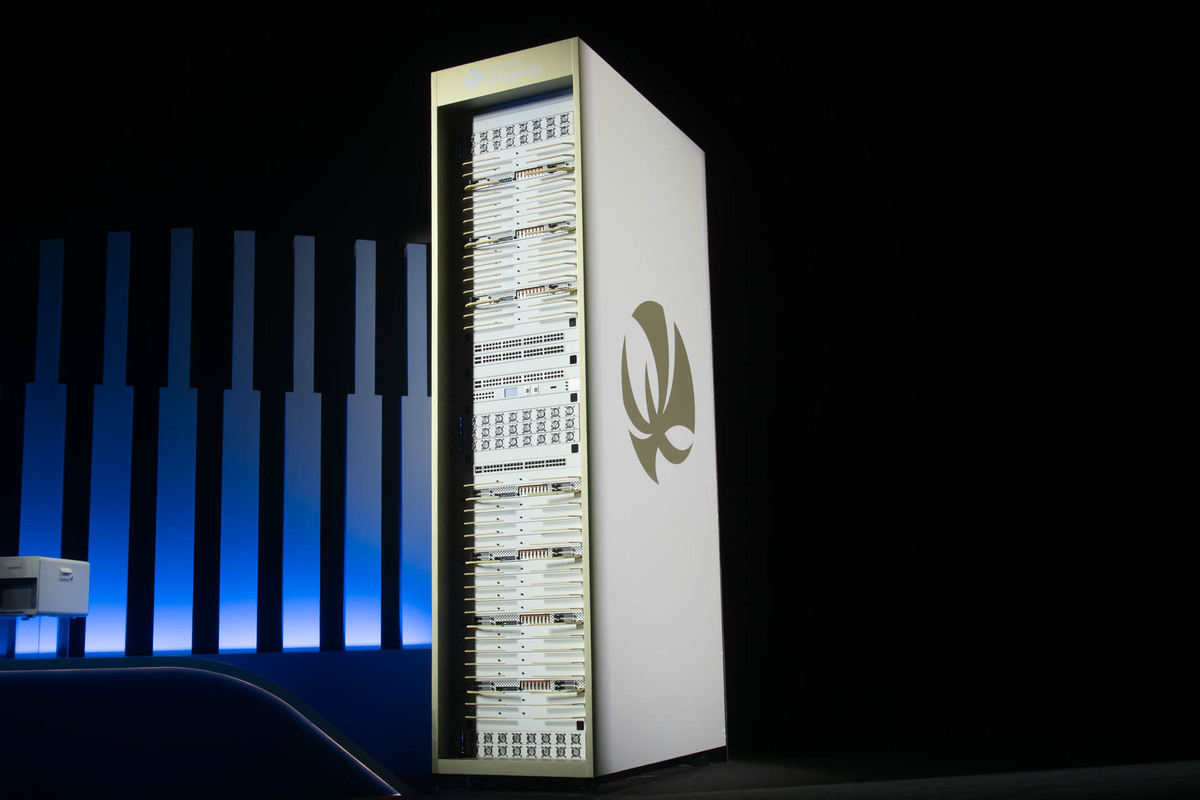
Qualcomm unveils 'Dragonfly' brand for data center AI infrastructure at COMPUTEX 2026. At COMPUTEX 2026 in Taipei, Qualcomm CEO Cristiano Amon introduced "Dragonfly," a new product brand for data center AI infrastructure. Amon declared 2026 "the year of the agent" and detailed how agentic AI will shift compute demand from device-only to a distributed cloud-edge model. He projected global token demand reaching 401.48 quintillion by 2030, arguing that this scale forces a split: certain workloads run on-device (on Qualcomm's Snapdragon NPUs/GPUs) while others migrate to data centers. A Dragonfly-branded server rack was displayed; Qualcomm said it is already collaborating with hyperscalers and will share data center details at a June 24 investor briefing.
Why it matters: Qualcomm's Dragonfly move is a late but logical entry into the AI infrastructure segment, directly challenging NVIDIA in inference-optimized silicon for the data center edge. It exemplifies the "hyperscaler distribution moat" pattern—Qualcomm is leveraging its existing relationships with cloud giants (Snapdragon in mobile/PC) to wedge into server-side inference. The announcement also validates the open debate about the cloud-edge compute split: Qualcomm is betting that agentic AI's token economics will drive demand for low-power, distributed inference that legacy GPU-heavy data centers serve inefficiently. If Dragonfly gains traction, it could accelerate the ongoing shift from training-centric infrastructure (NVIDIA's stronghold) to inference-optimized architectures, reshaping capital allocation across the AI compute stack.
Grounded expert take: Qualcomm is attempting to replicate its mobile-chip success in the data center by positioning its ARM-based, power-efficient architecture as the natural inference substrate for agentic workloads running at the "edge of the cloud." The playbook mirrors the acqui-licensing pattern seen across silicon: Qualcomm has long held server-chip ambitions (remember Centriq?), but the agentic AI thesis gives it a better reason to try again. The key open question is software ecosystem—Qualcomm's AI Engine stack has limited reach outside mobile versus NVIDIA's CUDA moat. Success likely depends on hyperscaler commitment at the June 24 event; a deal with AWS or Azure would signal that the cloud-edge split is becoming a procurement reality, not just a keynote slide.