Scout AI Raises $100M Series A to Build Foundation Model for Unmanned Warfare
The AMW Read
Scout AI is a new entrant in the defense robotics segment; its $100M Series A and focus on a dedicated foundation model for warfare update the player map and signal a shift toward domain-specific AI for military autonomy.

Scout AI Raises $100M Series A to Build Foundation Model for Unmanned Warfare
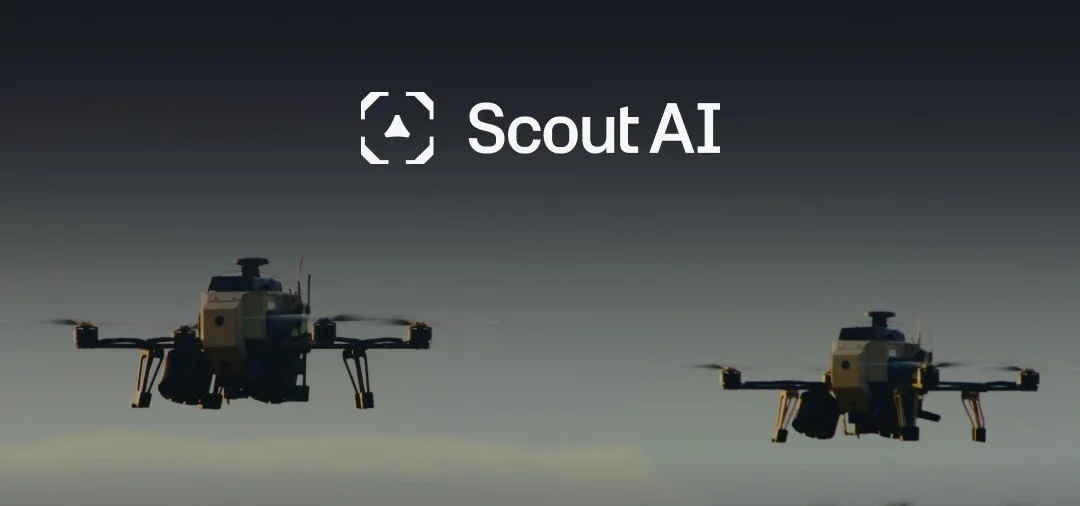
Scout AI, a defense-focused AI startup based in Silicon Valley, has raised $100 million in an oversubscribed Series A round co-led by Align Ventures and Draper Associates, with participation from Booz Allen Ventures, Decisive Point, and others. The company is developing Fury, a foundation model designed to serve as the decision-making layer for autonomous military operations, enabling command-and-control systems to coordinate large fleets of uncrewed systems across air, land, sea, and space. Since its founding 18 months ago, Scout AI has secured $11 million in U.S. Department of War contracts, launched its Ox autonomous vehicle orchestrator, and demonstrated a fully autonomous end-to-end strike mission executed by AI agents.
Why it matters: This round signals the emergence of a dedicated foundation model for defense autonomy, distinct from general-purpose AI platforms. Scout AI is positioning Fury as a domain-specific foundation model for military command and control, targeting a use case where speed, limited communications, and operational complexity demand specialized AI rather than adapted general models. The company's rapid contract wins and Series A raise reflect a growing appetite in the defense sector for autonomous systems that can operate at scale without human-in-the-loop oversight, a pattern we track as the "defense autonomy stack" segment within the broader robotics substrate.
Expert take: The $100 million raise at Series A — a relatively early stage for a 34-person team — underscores the capital intensity of building military-grade AI infrastructure and the strategic premium investors are placing on defense-tech startups. The involvement of Booz Allen Ventures, a major defense contractor's venture arm, suggests this is not just a financial bet but a pipeline play for future government contracts. However, the company faces significant technical and regulatory hurdles: foundation models for warfare must contend with adversarial environments, signal degradation, and ethical constraints that commercial AI systems avoid. The rapid pace of deployment — from founding to autonomous strike demonstration in 18 months — also raises questions about testing rigor and safety validation, an open debate in the robotics and defense AI substrate.

