Enflame Details Eight-Year Roadmap From Single AI Chip to 10,000-GPU Superpod Clusters
The AMW Read
Updates a known CN chip player with a full-stack architecture disclosure, a WAIC-launched 10,000-GPU supernode, and IPO-linked financials, extending AMW's prior STAR Market coverage.
Enflame Details Eight-Year Roadmap From Single AI Chip to 10,000-GPU Superpod Clusters
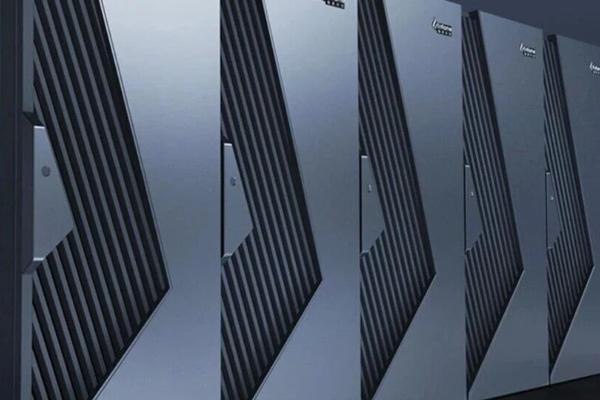
Enflame Technology (燧原), the Chinese AI chip maker undergoing Shanghai STAR Market IPO review, laid out an eight-year technology arc spanning four chip architecture generations, its GCU-CARE compute core (now in its fourth microarchitecture with native FP8 support), the GCU-LARE chip-to-chip interconnect, and the self-built TopsRider software stack covering drivers, compilers, operator libraries and deep-learning framework support. At the World Artificial Intelligence Conference, Enflame and ZTE launched the Yunsui ESL64-O superpod, using a cable-free orthogonal backplane design that supports networking for 10,000-GPU-class clusters. R&D spending totaled RMB 3.68 billion (~$507M) across 2023-2025, with 643 of 838 employees in R&D roles. Revenue grew from RMB 301M in 2023 to RMB 990M in 2025, then RMB 1.12 billion in the first half of 2026 alone, already exceeding all of 2025; AI accelerator cards and modules account for 86.83% of revenue.
The disclosure extends AMW's prior coverage of Enflame's June 2026 IPO review, when 2025 revenue had already tripled. Having rejected both Nvidia's GPGPU architecture and CUDA compatibility in favor of a proprietary instruction set, Enflame had to rebuild its entire software toolchain from scratch — a costly but increasingly common bet among CUDA-independent Chinese chip makers. Tencent, its largest shareholder at 20% and largest customer since 2019, functions less as a captive buyer than as a production testbed surfacing model-migration and cluster-stability problems lab benchmarks miss. The industry test is shifting from building one fast chip to fielding an entire compute system — chip, interconnect, software, and cluster together.
For investors weighing the STAR Market listing, customer concentration is the central risk: per the AI Market Watch index, Enflame has raised $746M to date (index coverage, not a census), and the IPO thesis depends on whether Tencent-validated capability transfers to a broader customer base. For builders evaluating non-CUDA silicon, the cable-free ESL64-O interconnect shows Chinese cluster engineering advancing alongside chip design — a second axis, beyond raw compute specs, worth tracking when assessing Nvidia alternatives at scale.
#Enflame #AIChips #China #Semiconductors #STARMarketIPO #DataCenterInfrastructure