HyperAccel and Rebellions advance chip integration for AI data centers
The AMW Read
This incrementally updates two accelerator developers, with segment-level implications for hardware integration; customer deployment and performance gains remain unproven.

Named counterparties: Rebellions
HyperAccel and Rebellions advance chip integration for AI data centers
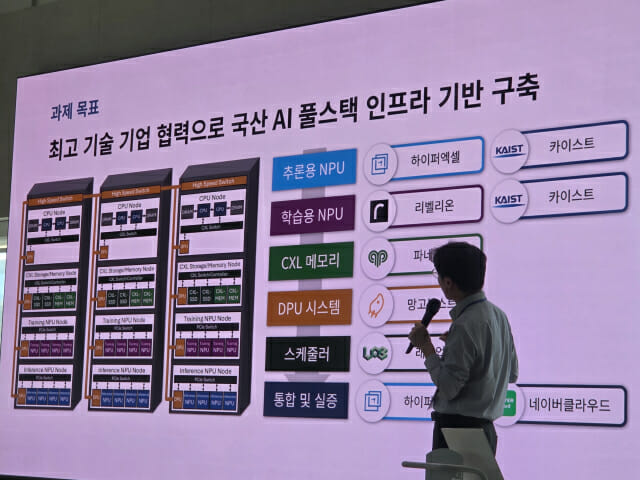
HyperAccel and Rebellions outlined progress toward a shared AI data-center system at K-Cloud Tech Day in Seoul on October 27. HyperAccel supplies LLM inference chips, while Rebellions develops training NPUs for the project. Rebellions has built a distributed training environment using RDMA networking. Participants plan to test different NPUs and data-processing units together in one server during the project's third year. HyperAccel also reported an initial proof of concept with Naver Cloud using its Bertha inference chip.
The effort moves competition from individual chip specifications toward system integration. The proposed architecture pools compute, memory and networking resources, then assigns them through software as workloads change. For alternative accelerators, scheduling and software compatibility can determine whether chip performance translates into useful data-center capacity. Numerical consistency remains an unresolved requirement: SqueezeBits has tested 16 operations with a simulator and plans to compare training results on actual Rebellions hardware.
Builders and investors should watch the planned integrated-server tests and customer validation. HyperAccel is developing a server supporting up to eight Bertha cards. It also reports simulated throughput gains of up to three times from assigning prefill to Bertha and decode to Nvidia GPUs. That result remains a simulation, while the Naver Cloud work remains an initial proof of concept. Measured throughput, power use and training consistency across real hardware would provide stronger evidence of deployment readiness.