Intel Builds 70-Person Quantum Team Around Silicon Spin Qubits
The AMW Read
Intel's disclosed 70-person quantum effort incrementally updates its infrastructure position, while making chip architecture and fab scalability central to the eventual market outcome.
Intel Builds 70-Person Quantum Team Around Silicon Spin Qubits
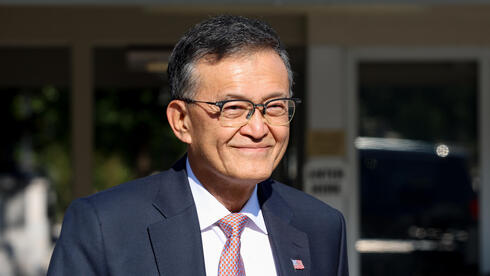
Intel CEO Lip-Bu Tan said the company has about 70 people working on quantum computing, centered on silicon spin qubits and the question of whether the technology can be manufactured in an Intel fab. Intel has previously developed the Tunnel Falls chip using industrial transistor-fabrication techniques, while continuing work on control and test infrastructure needed to scale larger quantum systems. Tan stressed that no quantum hardware architecture has yet won: superconducting circuits, trapped ions, photonics, neutral atoms, and silicon spin qubits remain competing approaches.
For the AI and advanced-computing market, Intel's bet is less about a near-term quantum product than about extending a manufacturing advantage into a still-unsettled hardware category. Silicon spin qubits could be strategically differentiated if they can use techniques compatible with conventional semiconductor fabrication, but useful systems still depend on error correction, controls, software, power, and physical infrastructure working together. The development also complicates Intel's recent manufacturing-capacity push: its $20 billion share offering for AI chip foundry expansion, reported in August, was focused on present-day silicon demand, whereas quantum is a longer-duration option on the same fabrication base.
Builders should treat hardware portability as a practical hedge while the quantum stack remains fragmented. Tan highlighted Classiq, an Israeli company developing hardware-agnostic quantum application-design software, as a potential design-layer analogue to Cadence; Classiq said in May 2025 that its $110 million Series C brought total funding to $173 million. For investors, Intel's team size is evidence of sustained strategic interest, not validation that silicon spin qubits will be commercially dominant. The more consequential milestone would be repeatable manufacturing and system-level performance, rather than another single-qubit demonstration.