OpenAI launches ChatGPT personal finance tools with Plaid integration for Pro users.
The AMW Read
New product extends ChatGPT into personalized finance, updating player map and validating hyperscaler-distribution pattern; not a new entrant but meaningful vertical expansion.

OpenAI launches ChatGPT personal finance tools with Plaid integration for Pro users.
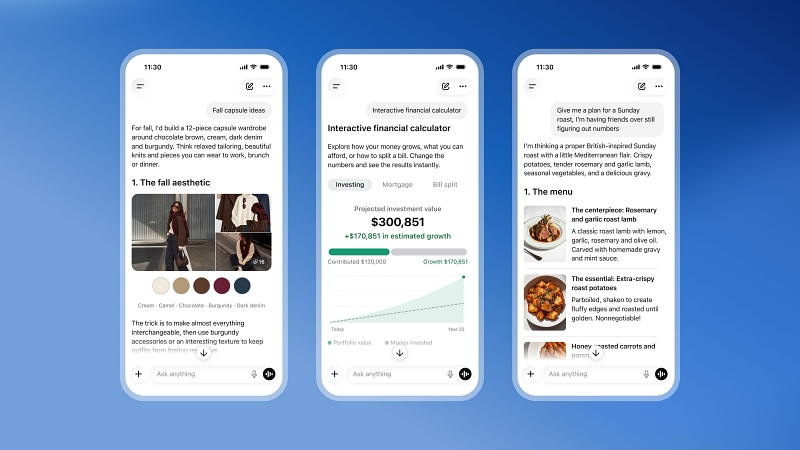
OpenAI has introduced a personal finance feature for ChatGPT Pro subscribers in the U.S., allowing them to link accounts from over 12,000 financial institutions—including Schwab, Fidelity, Chase, and Robinhood—via Plaid. The tool provides a dashboard showing portfolio performance, spending, subscriptions, and payment schedules. Users can ask queries like spending trend analysis or long-term financial planning. OpenAI noted over 200 million monthly ChatGPT users already ask financial questions. The move follows OpenAI's acquisition of the Hiro team in April, which brought finance-domain expertise.
This launch marks OpenAI's entry into personalized financial data aggregation, building on its existing health tools and signaling a broader push into vertical-specific agent products. By integrating read-only access to user banking and investment accounts, OpenAI extends its context-engineering moat—the model can now reason over real personal financial data, not just public information. This fits the pattern of hyperscaler distribution: OpenAI leverages its massive user base to cross-sell premium vertical tools, creating switching costs. It also updates the open debate about whether AI chatbots can become trusted financial advisors, as accuracy and privacy become paramount.
For the AI market, this is a significant product expansion that turns ChatGPT into a personal financial data platform. OpenAI now competes with fintech apps like Mint and Personal Capital, but with the added power of a reasoning model. The partnership with Plaid provides the critical data-access layer, while OpenAI's GPT-5.5 model promises improved reasoning with context. However, the product is currently limited to Pro subscribers, leaving room for broader rollout. The move also highlights the emerging pattern of AI companies acquiring vertical-specific teams (Hiro) to quick-start specialized features, an acqui-licensing strategy that boosts time-to-market.