Upstage acquires AI agent platform Timely to expand into consumer market
The AMW Read
Updates Upstage's §4 case study (if applicable) with a strategic acquisition that extends their consumer reach; segment-level impact for AI agents in Asia.

Upstage acquires AI agent platform Timely to expand into consumer market
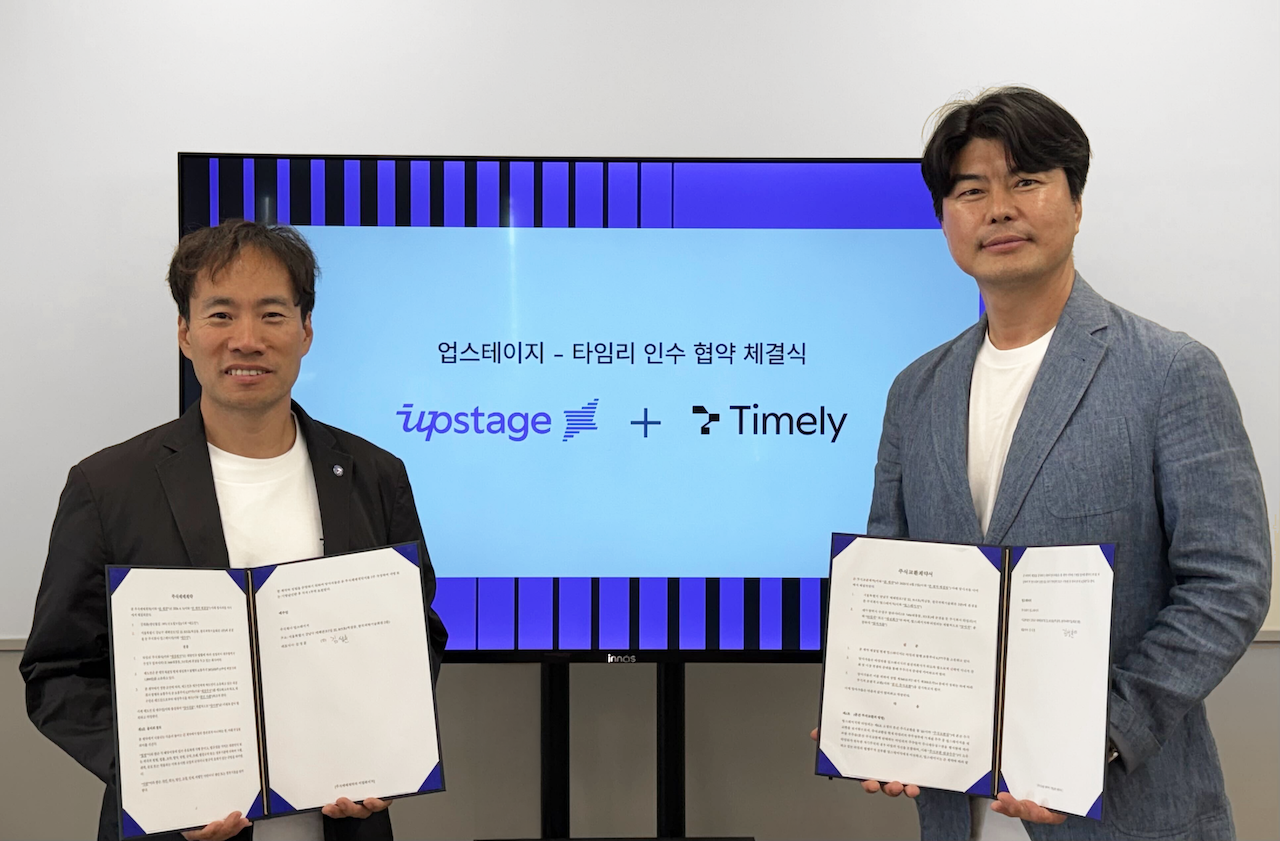
Korean AI company Upstage (업스테이지) has acquired Timely, an AI agent platform startup, in a move to broaden its reach beyond enterprise customers into the general consumer market. Timely operates Timely AI, a no-code platform that lets users build custom AI agents for tasks like prompt creation, image and video generation, and document conversion. The platform is already deployed in public institutions, including Seoul's municipal AI chatbot service, and across local governments and educational organizations nationwide.
Why it matters: This acquisition follows Upstage's earlier purchase of portal operator AXZ (operator of Daum), signaling a deliberate strategy to build a vertically integrated AI stack combining its Solar foundation model with distribution channels and consumer-facing agent capabilities. The pattern mirrors an emerging "acqui-licensing" play where Korean AI labs acquire downstream platforms to bypass the hyperscaler distribution bottleneck and capture end-user value directly. It also validates the thesis that AI agent platforms are becoming the primary interface for non-developer AI adoption in Asia's public sector and enterprise markets.
Grounded expert take: Upstage's strategy of acquiring both a distribution channel (AXZ/Daum) and an agent-building platform (Timely) in quick succession represents a capital-efficient alternative to building consumer traction organically. By integrating its Solar LLM into Timely's already-deployed public sector infrastructure, Upstage can immediately reach millions of users without the customer acquisition cost typical of B2C AI products. The question is whether the agent platform's public sector DNA will translate to the broader consumer market, or if Upstage will need a third consumer-native piece to complete the puzzle. If successful, this could become a playbook for other mid-tier foundation model labs seeking viable distribution outside the Big Tech ecosystem.