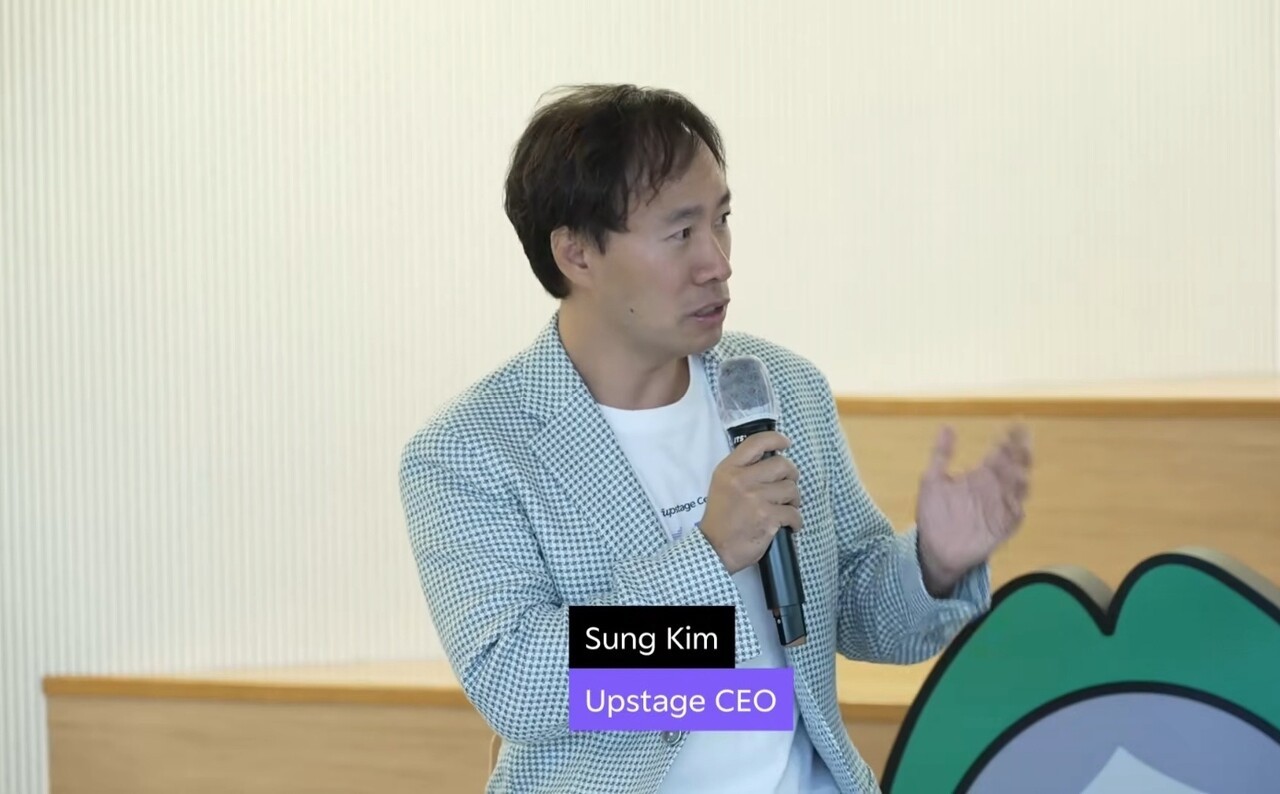
Upstage, in partnership with SK Telecom and LG AI Research, has advanced to the third phase of South...

Upstage, in partnership with SK Telecom and LG AI Research, has advanced to the third phase of South Korea's sovereign AI foundation model initiative, a government-backed project to develop domestic large language models. The consortium's model, Solar Open 2, features 250 billion parameters and a context window of up to 1 million tokens, equivalent to hundreds of pages of text. Upstage's role includes legal-domain data curation and model deployment, reflecting its broader strategy of integrating specialized vertical expertise into general-purpose AI systems. The company also confirmed that Solar Open 2 is already applied in its on-premise product for legal AI services, SuperLawyer, and was demonstrated at a recent event.
This advancement signals a continued consolidation of Korea's AI ecosystem around state-supported infrastructure, with Upstage positioning itself as a key domestic alternative to foreign foundation models. The project's emphasis on sovereign AI aligns with global efforts by governments to reduce reliance on overseas AI technologies, particularly in sensitive sectors such as legal and public services. For enterprise adopters, the availability of a locally developed, open-weight model with strong Korean-language capabilities and a large context window could lower barriers to adoption, especially in regulated industries where data sovereignty and on-premise deployment are critical.
For builders and investors, the practical implication is that sovereign AI programs are becoming a viable market channel for foundation-model companies. Upstage's ability to secure government backing while simultaneously commercializing its models through vertical applications like legal tech demonstrates a dual-track strategy that could be replicated in other countries pursuing national AI agendas. The focus on on-premise deployment also highlights a growing demand for models that can run efficiently on limited hardware, a factor that may shape future model design and infrastructure investment decisions.