Upstage, SK Telecom (SKT), and LG AI Research have advanced to the third phase of South Korea's gove...
The AMW Read
The update validates Upstage's government-backed position and the strategic importance of national AI efforts, but the company itself is already recognized in this space.

Named counterparties: LG AI Research
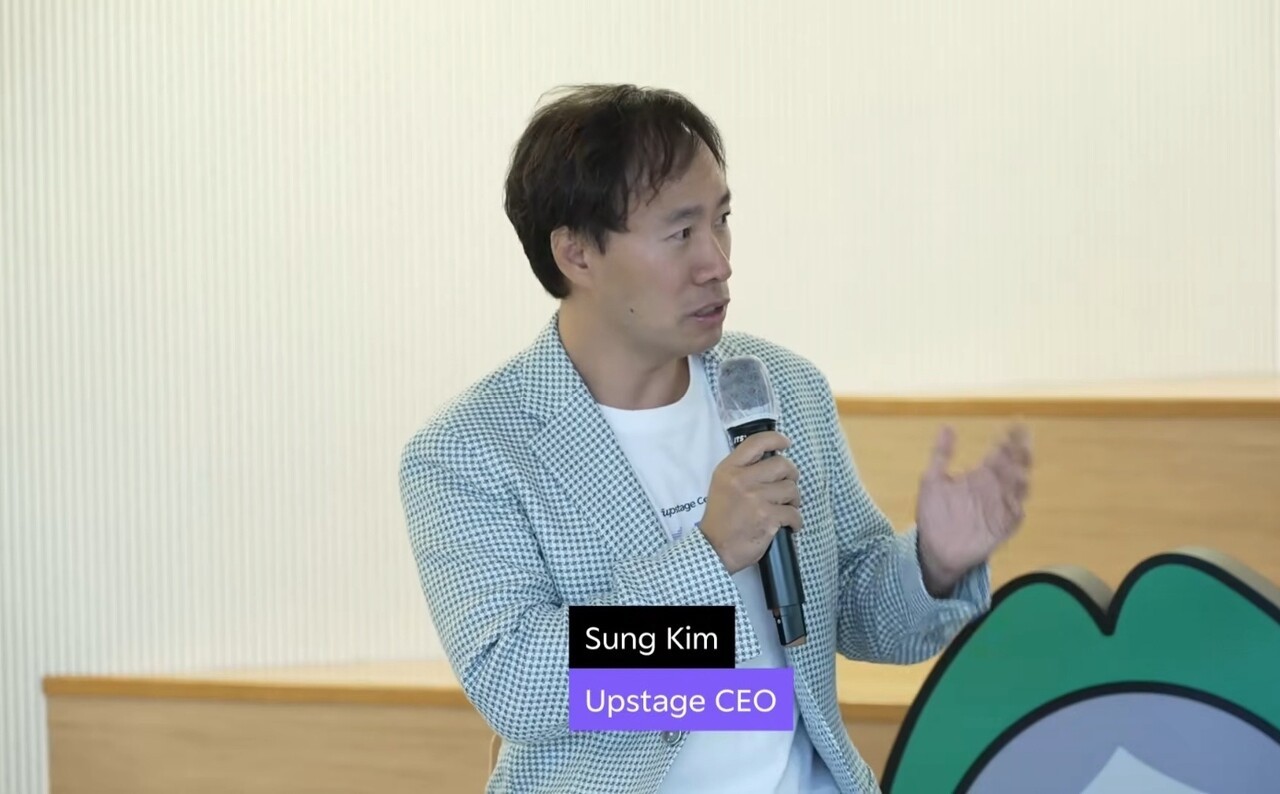
Upstage, SK Telecom (SKT), and LG AI Research have advanced to the third phase of South Korea's government-led 'Dokpamo' (독파모) sovereign AI foundation model project, passing the second-stage evaluation conducted by the Ministry of Science and ICT. Upstage was the only startup among the finalists, while Motif Technologies, which had joined the project through an additional selection process, failed to advance. The ministry confirmed the results on August 18, with the three teams now moving toward rigorous field validation and performance optimization ahead of the final assessment.
SKT's second-stage submission, the A.X K2, expands to 688 billion parameters from its predecessor's 519B and improved average performance by 32.2 percentage points across 14 domestic benchmarks, with particular gains in long-context comprehension and agentic task scores. LG AI Research's K-Exaone 2.0, the largest of the three at 750B parameters, is over three times bigger than its prior 236B version and now carries an Apache 2.0 open-source license. Upstage's Solar Open 2, built for cost-efficient execution, activates only about 15 billion of its 250 billion total parameters during inference and handles up to 1 million tokens using a hybrid attention architecture that combines fully efficient and linear designs.
The project operates as a formal sovereign-AI program, positioning Korean-developed models as alternatives in commerce, defense, manufacturing, legal, and public-safety segments. SKT is already supplying its earlier A.X K1 to the Ministry of National Defense, while Upstage's work with Daum portal and domestic NPU provider FuriosaAI reflects early progress in building a native Korean technology ecosystem that integrates software with domestic hardware. For investors and builders, this it marks a stage where local awardees are increasingly focused on real-world deployment — not just benchmark announcements — and the emerging need for sovereign model stacks with credible alternatives to US-designed infrastructure.