XCENA raises $135M Series B at $570M valuation for in-memory AI compute chips
The AMW Read
Novelty: 2 — introduces a new approach to memory-centric inference compute, updating the AI infrastructure player map with a credible founding team. Significance: 2 — if validated, it could reshape inference cost structure across the segment, but production is unproven and still a year out.

XCENA raises $135M Series B at $570M valuation for in-memory AI compute chips
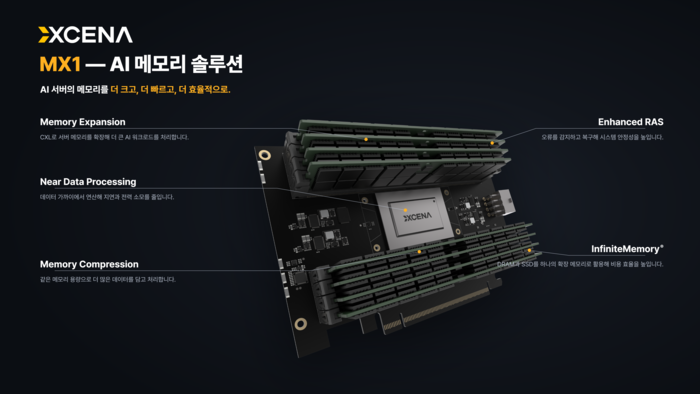
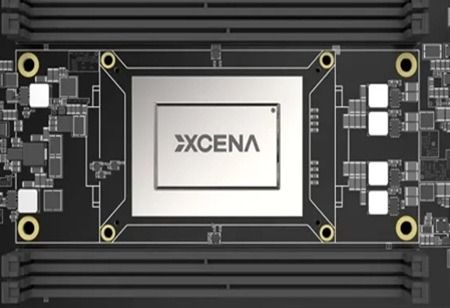
XCENA, a chip startup with offices in South Korea and the US, has raised $135 million in a Series B round at a $570 million valuation. The round was led by Seoul-based firms Atinum and IMM Investment. The company plans to commercialize its MX1 chip, which processes AI data directly within memory via the CXL interface, handling preprocessing, KV cache management, and data orchestration without routing through expensive CPUs or GPUs. Founded in 2022 by Samsung and SK Hynix veterans, XCENA argues AI inference is increasingly a memory-scaling problem. Mass production is scheduled via Samsung's foundry by end of 2026, with revenue expected from 2027.
Why it matters: XCENA's approach speaks to a structural pain point in AI inference economics. As models grow and context windows expand, memory bandwidth — not just raw compute — becomes the bottleneck, especially for serving large-scale reasoning and retrieval-augmented generation workloads. By offloading memory-side processing, XCENA claims it could reduce server requirements tenfold, directly challenging the capital-intensive build-out pattern that has dominated AI infrastructure. If validated at scale, this would represent a new architectural lever in the ongoing contest to drive down inference cost, a dynamic the industry has tracked closely as a recurring moat pattern.
Grounded expert take: XCENA sits at the intersection of two forces: the rising complexity of inference serving (KV cache management, context orchestration) and the need to escape the von Neumann bottleneck that plagues conventional GPU-centric designs. The founding team's Samsung/SK Hynix pedigree gives the startup credibility in the memory ecosystem, and the CXL-based integration path avoids a clean-sheet architecture that would face hyperscaler resistance. However, production is still a year away, and the company must prove that its claims of tenfold server reduction hold at real-world workloads under latency constraints. The $135M round is sizable for an unproven architecture, but the company's valuation — roughly 4x the raise — suggests investors are betting on a structural wedge in inference infrastructure rather than near-term revenue.