On January 2, 2026, Biren Technology became the first Chinese GPU designer to list in Hong Kong. The stock closed 76% above its IPO price. Retail subscriptions hit 2,348x oversubscription - a record for Hong Kong over the past year.
This is not an isolated event. It marks the beginning of a concentrated wave.
The Week Ahead
Company | Type | Raise | Valuation | Status |
|---|---|---|---|---|
Biren Technology | GPU Design | $717M | HK$46.9B (at IPO price) | Listed Jan 2 |
Zhipu AI | Foundation Model | $560M | $6.6B | Scheduled Jan 8 |
MiniMax | Foundation Model | $492-538M | $6.5B | Scheduled Jan 9 |
If all three proceed as planned, Chinese AI companies will have raised nearly $1.8 billion from Hong Kong public markets in a single week.
A fourth company, Moonshot AI, took a different path - closing a $500M private round on December 31 at a $4.3B valuation. CEO Yang Zhilin said the company is "in no rush for an IPO." With over $1.4B in cash reserves, they can afford to wait.
The Competitive Landscape: China's "Big Six"
These companies operate within a defined competitive set. Industry observers refer to China's leading foundation model developers as the "Big Six":
Zhipu AI - Tsinghua University spinout, GLM model series
Moonshot AI - Kimi assistant, strong consumer traction
MiniMax - B2C focus with Talkie and Hailuo AI
Baichuan - Enterprise-focused, founded by former Sogou CEO
01.AI (Lingyi Wanwu) - Led by Kai-Fu Lee
StepFun (Jieyue Xingchen) - Backed by Chinese state capital
This classification covers independent, VC-backed startups. It excludes DeepSeek (a research lab spun from quant fund High-Flyer) and big tech AI teams like Alibaba's Qwen, Baidu's ERNIE, and ByteDance's Doubao - some of which may have greater technical influence but operate under different corporate structures.
Zhipu and MiniMax are now racing to become the first publicly listed foundation model company globally. The distinction matters for positioning: whoever lists first claims the "first mover" narrative in investor presentations.
Why Public Markets, Why Now
1. The cost structure demands it
Foundation model training requires capital at a scale that strains venture funding. Zhipu AI lost RMB 2.36B ($329M) in the first half of 2025 alone. Revenue for the same period: RMB 191M ($27M). This 12:1 loss-to-revenue ratio is typical for the sector.
MiniMax reported $512M in losses against $53M in revenue for the first nine months of 2025 - a similar ratio. These are not companies approaching profitability. They are companies requiring sustained capital deployment measured in hundreds of millions annually.
Public markets offer longer runways than private rounds - and critically, they offer liquidity for early investors who have been waiting since 2019-2021 vintage investments.
2. Hardware constraints created a market thesis
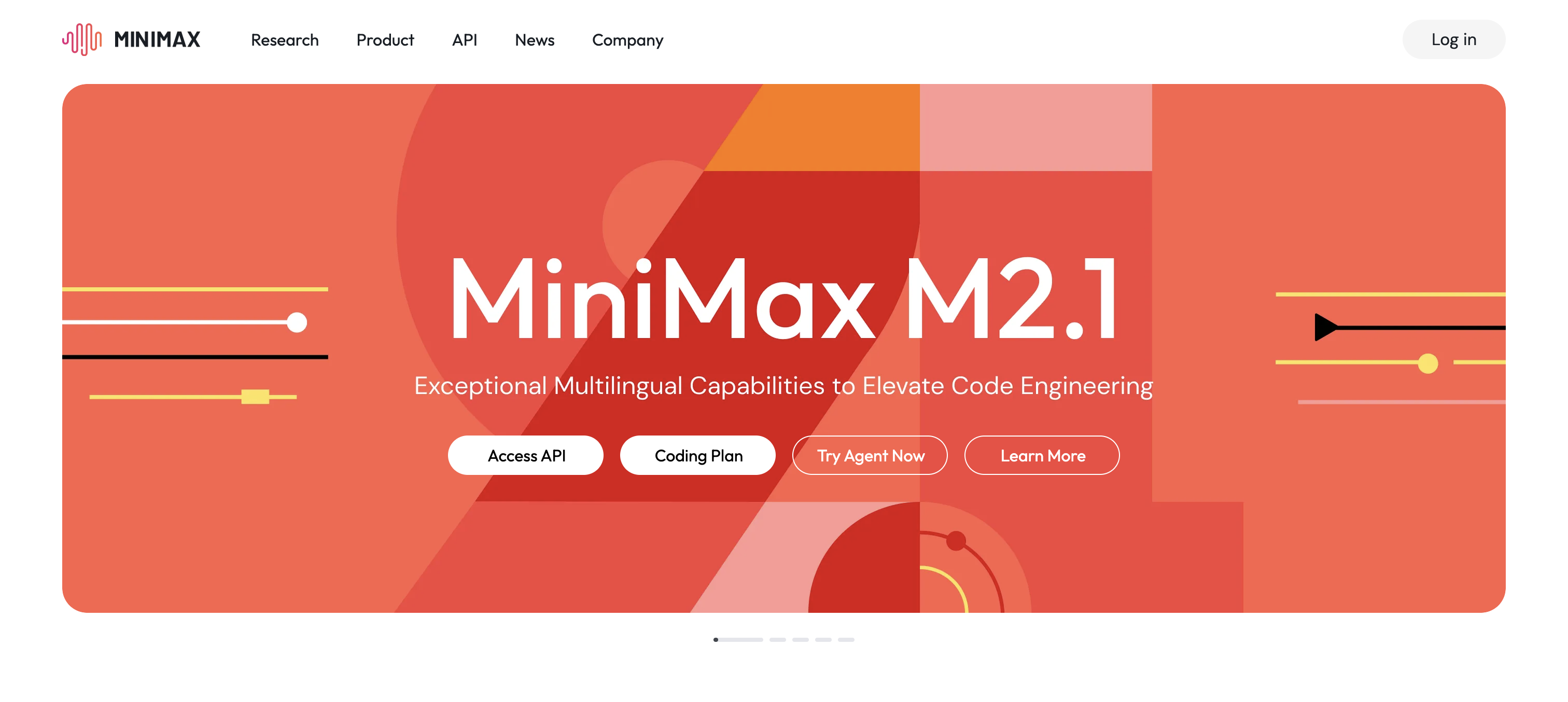
Biren was added to the U.S. Entity List in October 2023. Rather than destroying its IPO prospects, this restriction became part of the bull case.
The company's BR100 GPU, launched in 2022, uses a chiplet architecture with 77 billion transistors on TSMC's 7nm process. Performance benchmarks show it competitive with Nvidia's A100 in deep learning workloads - though it trails the newer H100 by a significant margin.
The investment thesis is not "Biren matches Nvidia." It is: "Restricted access to Western semiconductors creates guaranteed domestic demand for Chinese alternatives." Policy risk transformed into policy support. The Entity List has become a moat.
Zhipu AI faces the same dynamic. It was added to the U.S. Entity List in January 2025, cited for involvement in "advancing PRC military modernization." The company's IPO prospectus acknowledges the restriction but states it "will not cause any material adverse effect" on operations.
3. The DeepSeek effect
In January 2025, DeepSeek released its R1 model - reportedly trained for $6M versus the $100M+ typically required for frontier models. Nvidia lost $589B in market value in a single day, the largest single-day loss for any company in stock market history.
The event had two effects on Chinese AI capital markets:
It renewed global investor interest in Chinese AI capabilities
It validated efficiency-focused approaches that work within hardware constraints
Hong Kong's 2025 IPO market raised $36.5B from 114 listings - its strongest year since 2021 and more than triple the 2024 total. The AI/semiconductor sector drove much of this recovery.
4. The U.S. IPO window is opening
Both Zhipu and MiniMax face a timing constraint beyond their immediate capital needs. OpenAI and Anthropic are expected to pursue IPOs in 2026.
Current estimates place OpenAI's potential valuation at $500B-$1T and Anthropic's at $300B-$350B. Once those offerings hit the market, smaller AI companies - including Chinese firms - may find it harder to attract investor attention at favorable valuations.
The rush to list reflects this calculus: secure capital now, before the window narrows.
The Valuation Gap
The scale difference between U.S. and Chinese AI valuations is striking:
Company | Valuation | Revenue (2025 est.) | Status |
|---|---|---|---|
OpenAI | $500B+ | $20B+ ARR | Private, IPO expected 2026 |
Anthropic | $300-350B | $4-5B ARR | Private, IPO expected 2026 |
Zhipu AI | $6.6B | ~$100M | IPO Jan 8 |
MiniMax | $6.5B | ~$70M | IPO Jan 9 |
OpenAI is valued at roughly 75x the Chinese foundation model leaders. This gap reflects multiple factors: market size, technology perception, ecosystem integration (Microsoft, Amazon partnerships), and geopolitical risk pricing.
For investors, the question is whether this gap represents opportunity or appropriate risk adjustment.
What the Filings Show
Biren Technology is allocating 85% of IPO proceeds to R&D, with a focus on next-generation BR20X chips scheduled for 2026 and BR30X/BR31X for 2028. The company posted RMB 58.9M in H1 2025 revenue against RMB 1.6B in losses. Cornerstone investors include Qiming Venture Partners, Ping An Life Insurance, and UBS.
The technical roadmap is ambitious. Biren claims its upcoming chips will close the gap with Nvidia's current generation. Independent verification at scale remains pending.
Zhipu AI will direct 70% of proceeds toward foundation model R&D through 2028. The company claims 2.7 million paying API developers - a significant distribution footprint if accurate. Backers include Alibaba, Tencent, Meituan, and Saudi Aramco's Prosperity7 Ventures.
Zhipu's GLM-4 model and Qingyan consumer app represent a dual B2B/B2C strategy. The company also operates bigmodel.cn, a Model-as-a-Service platform positioning it as infrastructure rather than just application.
MiniMax has secured cornerstone commitments from Alibaba, Abu Dhabi Investment Authority, and Mirae Asset. Unlike its peers, MiniMax derives 65% of revenue from consumer products - its Hailuo AI video platform and Talkie companion app.
This B2C focus differentiates its business model but also exposes it to regulatory scrutiny. Hollywood studios filed a $75M copyright suit against Hailuo AI in September 2025. Chinese regulators have also proposed rules limiting how AI chatbots can interact emotionally with users - directly relevant to Talkie's companion functionality.
Risk Factors
1. U.S. Export Controls - Evolving and Unpredictable
The regulatory environment continues to tighten. Key developments:
January 2025: BIS issued the "AI Diffusion Rule" creating a three-tier global framework for chip access
March/September 2025: 65 additional Chinese entities added to Entity List
Ongoing: Proposed restrictions on cloud computing access
Current U.S. rules restrict direct chip sales but do not prohibit cloud access. Chinese entities have exploited this loophole - public tender documents show organizations accessing Nvidia A100/H100 chips through AWS and Azure via intermediaries.
U.S. lawmakers are pushing to close this gap. The Remote Access Security Act passed the House Foreign Affairs Committee in April 2025. If enacted, it would authorize BIS to regulate cloud-based access to restricted technologies.
For Chinese AI companies, this creates uncertainty. Cloud workarounds have enabled continued access to advanced compute. Closing this loophole would increase costs and potentially slow development timelines.
2. Technical Verification Gap
Performance claims from Chinese chip and model developers remain difficult to verify independently. Biren claims BR100 delivers 2.6x speedup over Nvidia A100 in certain workloads. These benchmarks come from company-sponsored tests, not third-party validation.
Similarly, foundation model benchmarks often show Chinese models competitive with GPT-4 class systems. Real-world enterprise deployment data is limited. The gap between benchmark performance and production reliability is a known issue across the industry - but particularly relevant when evaluating companies with limited deployment history.
3. Competitive Dynamics Within China
Six major foundation model companies, plus Baidu, Alibaba, Tencent, and ByteDance's internal efforts, are competing for a market that may not support all of them.
Tencent executive described this as a "war of hundred models." Consolidation is likely. The question is which companies survive and at what valuation.
4. Governance and Transparency
Public listing brings quarterly reporting requirements. These companies will now need to disclose financial performance, customer metrics, and risk factors on a regular basis.
For investors accustomed to opaque private market updates, this represents an improvement. For the companies themselves, it means increased scrutiny on metrics that may not look favorable in the near term.
The Broader Pipeline
Hong Kong's AI listing wave extends beyond foundation models:
Moore Threads and MetaX (GPU designers) debuted in Shanghai in December 2025, surging 425% and 693% respectively
Iluvatar CoreX (AI chips) scheduled to list January 8
Baidu's Kunlunxin (AI chip unit) filed for Hong Kong IPO on January 2
Seven additional companies submitted listing applications on January 1 alone
The pattern covers the full compute stack: chips, memory, and models.
This is not random timing. Chapter 18C listing rules, designed for pre-revenue technology companies, have created a viable path for loss-making AI firms. Hong Kong provides access to international capital while maintaining regulatory alignment with mainland China. The venue is strategic.
What This Means
January 2026 marks a structural shift in how Chinese AI companies fund themselves. The transition from venture rounds to public markets brings three changes:
Scale: Public markets can absorb larger capital raises than typical venture rounds. Biren's $717M and Zhipu's $560M would be exceptional private rounds; they're mid-sized Hong Kong IPOs.
Accountability: Quarterly reporting replaces periodic investor updates. Financial performance becomes visible. The gap between narrative and numbers gets harder to maintain.
Liquidity: Early investors - some holding positions since 2019 - can begin realizing returns. This matters for the broader venture ecosystem and future fundraising.
Whether these companies can convert capital into competitive capability - and eventually profitability - remains to be seen. The losses are real. The technical gaps are real. The regulatory risks are real.
What's also real: $1.8 billion in public market capital flowing to Chinese AI in a single week, with more pipeline behind it.
The funding mechanism has changed. The accountability structure has changed. The performance is now visible.
AI Market Watch tracks 2,800+ AI startups globally. Data as of January 4, 2026.
