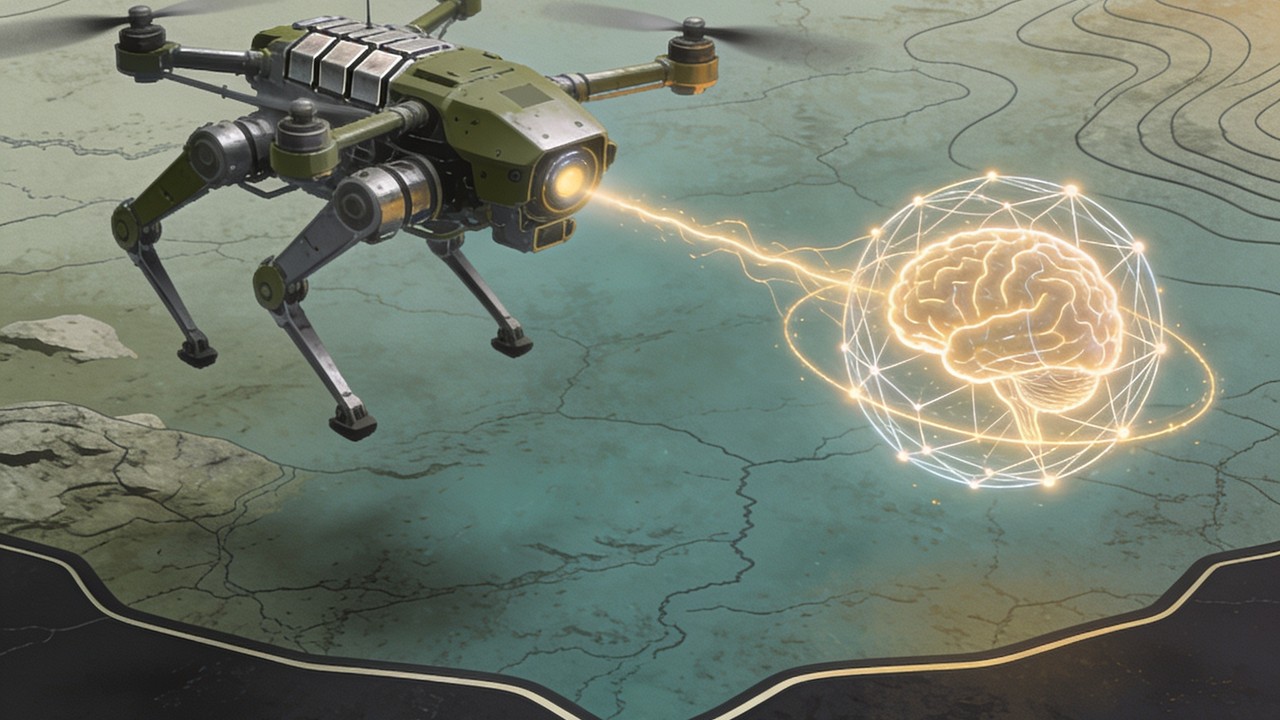
Defense Hardware vs. Embodied Brains: Capital's Great Bifurcation
Anduril Industries raised $5 billion in a Series H round at a $61 billion valuation on May 13, 2026, led by Thrive Capital and Andreessen Horowitz. The company simultaneously disclosed a framework agreement has been disclosed with the U.S. Department of Defense to produce at least 3,000 Barracuda-500M missile systems over three years, with initial deliveries in late 2027. These two facts — the largest single capital raise in AI-defense history and a production commitment denominated in thousands of physical munitions — belong to a different velocity regime than the one inhabited by Motion Brain, the Shanghai embodied-AI startup that closed a RMB 300 million ($41 million) Pre-A round four days later. The thesis that a single AI-capital supercycle exists in physical systems is false. The market is splitting into two distinct regimes — sovereign-backed defense hardware and state-backed embodied-AI brain platforms — each with different buyers, timelines, and scaling logic.
The Defense Hardware Velocity Regime
Anduril's $5B raise at $61B valuation represents a capital-compression event in the defense AI segment. The company has now raised $11.4 billion historically, according to CrunchBase. Anduril's CEO Brian Schimpf has not disclosed a revenue-guarantee dollar amount for the Barracuda-500M framework, but the minimum commitment of 1,000 missiles per year at a unit price typical for loitering munitions implies a contract value in the multiple billions defence-industry.eu. The valuation — more than 27x Anduril's estimated $2.2B in 2025 revenue — reflects investor conviction that software-defined, AI-native weapon systems will capture an increasing share of the Pentagon's modernization budget defence-industry.eu.
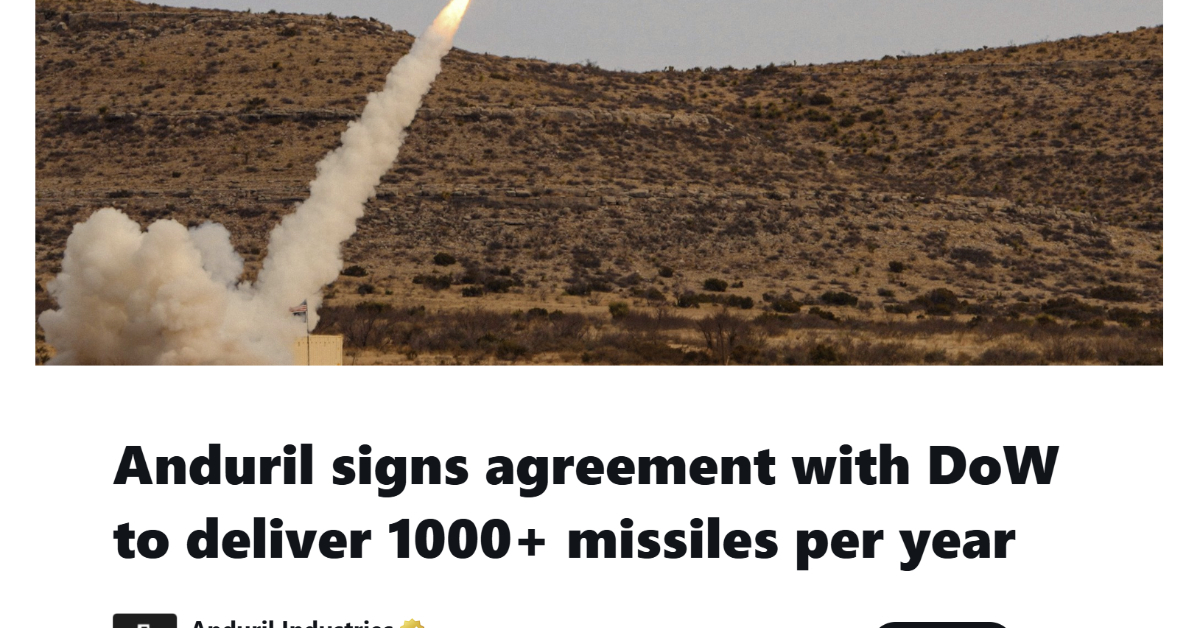
This is the canonical defense-startup-to-prime-contractor trajectory that Anduril and Shield AI have defined since 2024. Anduril's program accumulation — the YFQ-44A Fury selected for the USAF's Collaborative Combat Aircraft, the Microsoft IVAS takeover, the Ghost Shark XL-AUV through AUKUS — demonstrates that sovereign procurement can serve as a capital anchor for companies that would otherwise be constrained by venture capital return timelines. The difference in 2026 is velocity: Anduril raised $6.26 billion in its Series G in June 2025, then returned twelve months later for $5 billion more. The gap between rounds is compressing, not expanding, as DoD commitment clarity increases.
The Embodied Brain Platform Regime
Motion Brain, founded by Fudan University alumni, builds a "robot brain" — a general-purpose foundation model stack (MotionGPT, T²MB, HL3DWM) deployable across humanoid, logistics, cleaning, and industrial robot form factors without per-application retraining. The company claims its T²MB model can improve performance by 25% through continuous in-situ learning. It has secured a strategic agreement to supply 100,000 home-care robots with Yijia Elderly Care and targets ¥100 million+ (~$14 million) in orders with thousand-unit shipments by year-end 2026.
The capital structure here differs fundamentally from Anduril's. Motion Brain's investors include state-backed Green Technology Capital, Fujian Provincial Capital (Mintou Fund), and public company Leo Group — a mix of provincial development funds and strategic corporate investors rather than venture capital seeking 10x returns on a five-year clock. The company has raised five rounds in six months, a fundraising cadence that signals capital velocity concentration, not capital scarcity. But the total — $41 million — is two orders of magnitude below Anduril's single round.
This pattern repeats across the Huawei diaspora that now populates China's embodied AI ecosystem. Former Huawei executives and researchers have founded roughly ten embodied AI startups, including two $1 billion+ unicorns, according to a new analysis. Zhiyuan Robot (智元机器人), co-founded by former Huawei veteran Deng Taihua and "genius youth" Peng Zhihui, and Tashi Zhihang (它石智航), led by ex-Huawei Car BU chief scientist Chen Yilun with a domestic single-round record of $455 million, represent the total capital deployed across these Huawei-spawned companies likely exceeds $2 billion — comparable to a single Anduril round, but spread across a dozen competing platforms.
The Mechanism: Different Clocks, Different Buyers
The bifurcation is not merely geographic — U.S. defense hardware versus Chinese embodied brains — though geography correlates strongly. The deeper mechanism involves three structural differences in how capital flows through each regime.
Buyer concentration: Anduril sells to exactly one customer (the U.S. Department of Defense, plus allied sovereigns through AUKUS and the UAE EDGE partnership). That customer has an effective unlimited budget for systems that meet operational requirements, and it pays in procurement contracts that de-risk venture capital. Motion Brain's buyers are fragmented across elder-care institutions, sanitation departments, and logistics operators — each with limited budgets and skeptical procurement cycles. The Barracuda-500M framework guarantees multi-year revenue; the Yijia Elderly Care agreement is a strategic memorandum that could collapse if the first thousand units fail reliability testing.
Time horizon: Anduril's path from prototype to production is three years (Series G to first Barracuda deliveries in H1 2027). Motion Brain's path from Pre-A to thousand-unit shipments by year-end 2026 is eight months. The compressed timeline in embodied AI reflects the reality that Chinese hardware startups must demonstrate commercial traction before the next funding round, or face a valuation reset. Anduril's timeline reflects the Pentagon's requirement for proven systems, not the venture capital calendar.
Capital productivity: Anduril's $11.4 billion in total funding has produced a $2.2 billion revenue stream and a production framework for thousands of physical missiles. Motion Brain's $41 million has produced a claimed 25% performance improvement on baseline models and a partnership agreement — no disclosed revenue, no deployed units at scale. Neither capital-efficiency ratio is obviously superior; they are simply measuring different things against different benchmarks.
The Counter-Signal
The most specific risk to the defense hardware regime thesis is that Anduril's Barracuda-500M production framework lacks a disclosed contract value. The company has not publicly stated a revenue-guarantee dollar amount, making it impossible to assess whether the production commitment represents a binding procurement or a framework that could be restructured under a new administration defence-industry.eu. The Trump administration's focus on accelerating military technology cuts both ways: it creates demand velocity but also introduces political risk if leadership changes priorities. Anduril's $61 billion valuation — higher than many traditional prime contractors on a revenue multiple basis — prices in a level of procurement certainty that has not yet been demonstrated at serial manufacturing scale defence-industry.eu.

For the embodied brain regime, the counter-signal is Motion Brain's absence of comparative benchmarking. The company's claims of 25% performance improvement through in-situ learning are not accompanied by published results against DeepSeek's embodied models or Nvidia's Isaac platform. The "100,000 home-care robots" deal with a state-aligned partner mirrors the pattern common in Chinese robotics: government-authorized deployment routes that provide distribution but may not reflect genuine consumer demand. The open question is whether a cross-form-factor brain can show unit-economics advantage over best-in-class single-task models, and Motion Brain has not yet disclosed inference cost per robot or hardware-software bundling terms.
Precedent as Predictor
The Anduril trajectory follows the pattern established by its Series G in June 2025: direct-award defense contracts at scale, sovereign capital cycling through venture structures, and valuation multiples that would be unjustifiable in commercial markets but make sense when the buyer has a $850 billion defense Shield AI's December 2024 Series F at $5.3 billion with $267 million in disclosed ARR and 64% year-over-year growth demonstrated that defense AI can achieve capital-market transparency unusual for the sector defence-industry.eu. Anduril's Series H extends that pattern by an order of magnitude.
The Motion Brain trajectory follows the pattern established by Unitree's G1 at $16,000 in August 2024: Chinese vertical integration producing a price point that Western competitors cannot match, with state capital access and domestic deployment commitments keyirobot.com. Unitree's planned Q2 2026 Hong Kong IPO would provide the first transparent financial disclosure for any humanoid company globally, but the precedent is cautionary: DJI's 2015 consumer-drone disclosure reshaped Western VC capital plans, but it took a decade of operational history to reach that point keyirobot.com. Motion Brain has six months of fundraising history and no deployed product.
One Capital Pool, Two Games
The implication for investors and founders is that the "physical AI" category has ceased to exist as a single investment thesis. If you are backing Anduril, you are building a sovereign-adjacent manufacturing platform that will compound through procurement cycles and survive any single administration. If you are backing Motion Brain, you are betting on a foundation model bet that the embodied brain is the scarce bottleneck in a market where hardware is commoditizing — a thesis that requires proving before the next funding round arrives.
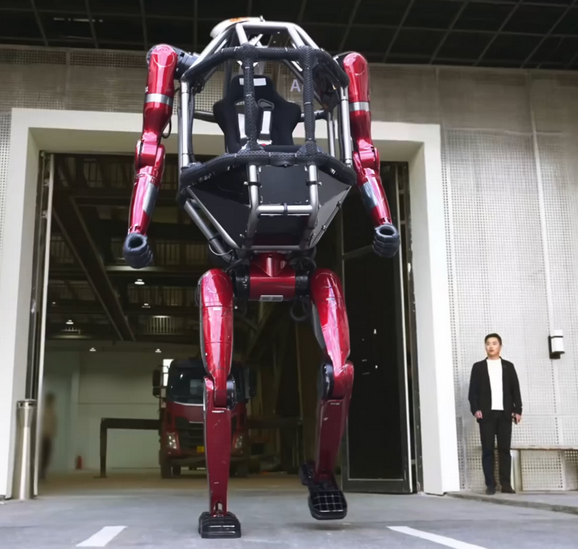
The two regimes coexist within the same capital ecosystem, but they answer to different clocks, different customers, and different failure modes. Treating them as variations on a single "AI-in-the-real-world" theme is a category error that will misallocate capital until reality corrects the frame. The correction has already begun: Anduril's $5 and Motion Brain's $41 million were raised in the same week, in the same market, by companies that would appear in adjacent columns of any sector map. They belong in separate maps entirely.
Notes. The open question this column cannot resolve is whether the embodied brain regime can escape its current scale limitation — $41 million Pre-A rounds rather than $5 billion Series H — through commercial traction alone, or whether the bifurcation reflects a permanent structural difference in the addressable for weapons systems versus service robots. That answer will emerge when one of the Huawei-spawned unicorns reaches revenue comparable to Anduril's disclosed ARR, or when Anduril's production framework reveals whether a venture-backed defense startup can actually manufacture at Lockheed Martin volumes. Until then, the two regimes remain parallel experiments in how much capital an AI-native physical system can absorb before it must deliver something real.
