
Executive Summary
The third week of January 2026 has confirmed a definitive capital rotation: the smart money is moving from generative text to embodied physical intelligence.
While earlier signals pointed toward vertical consolidation - exemplified by Mobileye’s acquisition of Mentee Robotics - the latest mega-rounds suggest a diverging thesis is gaining traction: the emergence of the "Universal Robot Brain." The headline transaction is Skild AI’s massive $1.4 billion Series B, valuing the firm at $14 billion, but the strategic signal is equally strong in China, where fierce rivals ByteDance, Alibaba, and Meituan have formed a rare investment coalition to back X Square Robot.
This analysis examines the structural shift from hardware-centric robotics to software-defined autonomy, the economic implications of "Vision-Language-Action" (VLA) models, and the emerging bifurcation between Western and Eastern scaling strategies.

The Market Signal: Decoupling Brains from Bodies
For decades, robotics was a vertical game: companies built the hardware, the sensors, and the control logic. That era is ending. The market is now validating a horizontal operating layer for physical reality.
The $14 Billion Bet on Generalization
Skild AI’s $1.4 billion raise, led by SoftBank on January 14, represents the largest single validation of the General-Purpose Foundation Model for Robotics. Unlike legacy players (e.g., Boston Dynamics) that hand-tuned control theories for specific morphologies, Skild is deploying a "Brain" capable of controlling diverse form factors via in-context learning. This decoupling mirrors the PC era’s split between Windows/Intel and hardware OEMs. Investors are betting that the value capture lies in the reasoning layer, not the chassis.

The Chinese 'United Front'
On January 13, X Square Robot secured over $140 million in a Series A++ round. The capital is significant, but the cap table is historic. It includes ByteDance, Alibaba, and Meituan—three platforms that typically compete aggressively. Their simultaneous backing of X Square’s "WALL-A" architecture signals a consensus in the Chinese market: embodied AI is a shared infrastructure requirement for future logistics and services, too capital-intensive and critical to be left to siloed development.

Technical Deep Dive: The Rise of VLA Architectures
The core enabler of this financial shift is the maturation of Vision-Language-Action (VLA) models, which allow robots to reason about unstructured environments rather than simply following pre-programmed paths.
From Scripted to Probabilistic: Traditional industrial robots rely on deterministic "teach pendants." The new wave, exemplified by Skild’s architecture and Yann LeCun’s newly launched AMI Labs (aiming for World Models beyond LLMs), utilizes self-supervised learning on massive datasets. This allows for zero-shot generalization—the ability to perform a task (e.g., "pick up the red apple") without explicit prior training on that specific object.
Inference Economics: The sheer compute density required for this is reshaping the semiconductor landscape. With Nvidia’s $20 billion acquisition of Groq now finalized, the infrastructure for real-time, low-latency inference (essential for preventing physical accidents) is being vertically integrated. However, startups like Applied Brain Research are countering this with low-power state-space chips, offering a 10x efficiency gain for on-device processing. The battle for the "robot cortex" is splitting between massive cloud brains and efficient edge reflexes.
Analyst Note: The shift to VLA models drastically alters the cost structure of deployment. Multiply Labs recently reported that integrating Nvidia’s physical AI stack reduced biomanufacturing costs by 70%, dropping per-dose expenses from $100,000 to $25,000. This proves that cognitive automation is now a deflationary force in high-value physical sectors.
Strategic Context: Sovereign and Defense Implications
The embodied AI trend is not purely commercial; it is rapidly becoming a matter of national industrial policy. This week saw Harmattan AI secure a $200 million Series B led by Dassault Aviation. This deal integrates sovereign autonomous agents directly into the Rafale F5 fighter program.
We are witnessing a bifurcation in deployment philosophy:
The Euro-Sovereign Model: exemplified by Harmattan and Mistral, focusing on "sovereign autonomy" where the model weights and training data remain within national borders/defense primes.
The US/Asia Hyperscale Model: exemplified by Skild and X Square, aiming for massive scale and commercial ubiquity across logistics, manufacturing, and eventually, the home.
Future Outlook: The Physical Turing Test
Looking ahead to the remainder of Q1 2026, we expect the "Physical Turing Test" - the ability of a robot to seamlessly operate in a messy, human-occupied environment- to become the new benchmark for AI valuation.
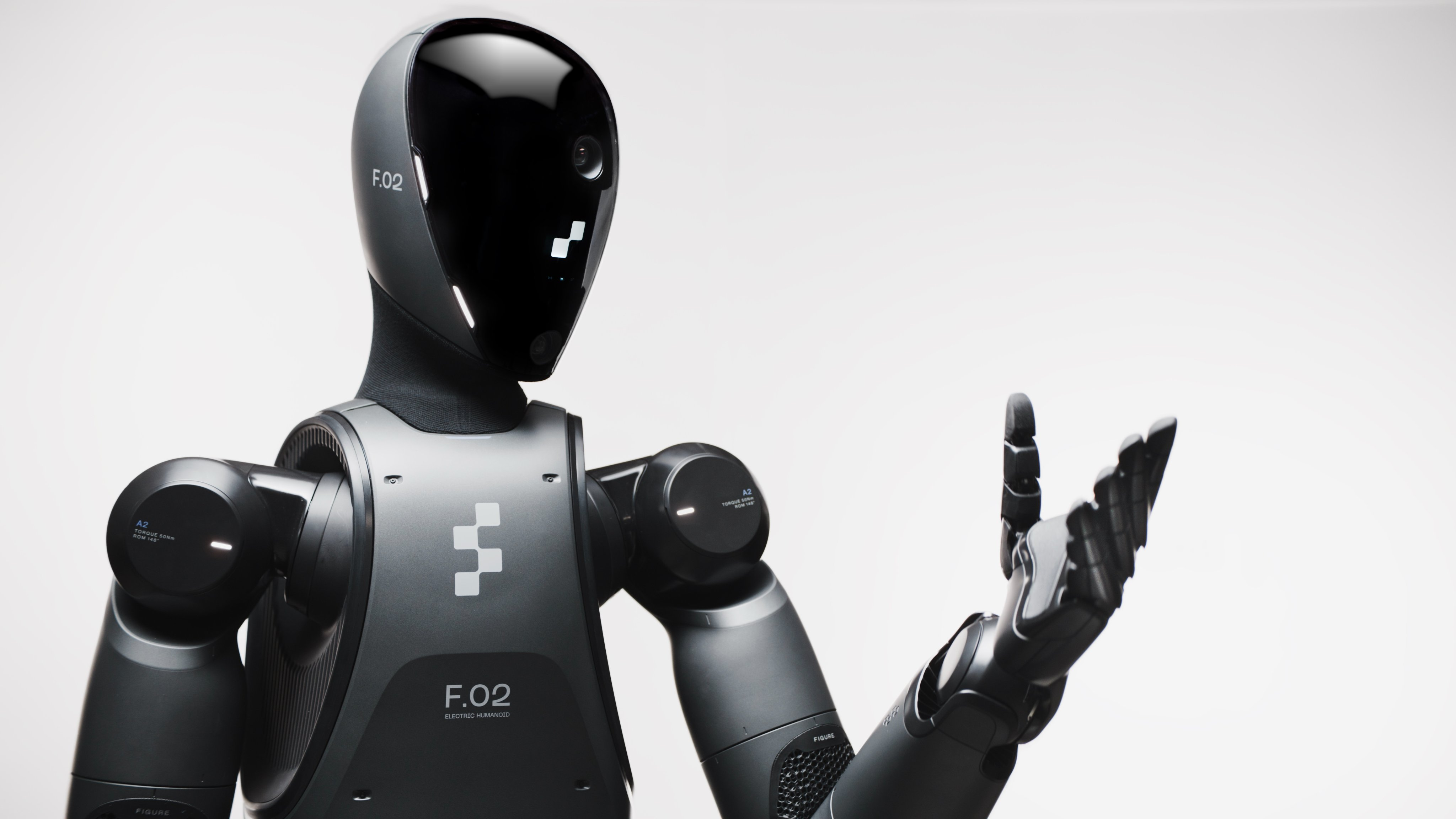
The consolidation of capital into a few "brain" winners (Skild, OpenAI/Figure, X Square) will exert immense pressure on hardware-only humanoid startups. Expect a wave of acqui-hires or bankruptcies among hardware firms that fail to secure a license for a top-tier "brain." Furthermore, with ByteDance and Alibaba aligning, we anticipate an acceleration of industrial-scale pilot programs in Chinese logistics hubs, potentially outpacing Western deployment in real-world data collection—a critical moat for the next generation of physical models.
