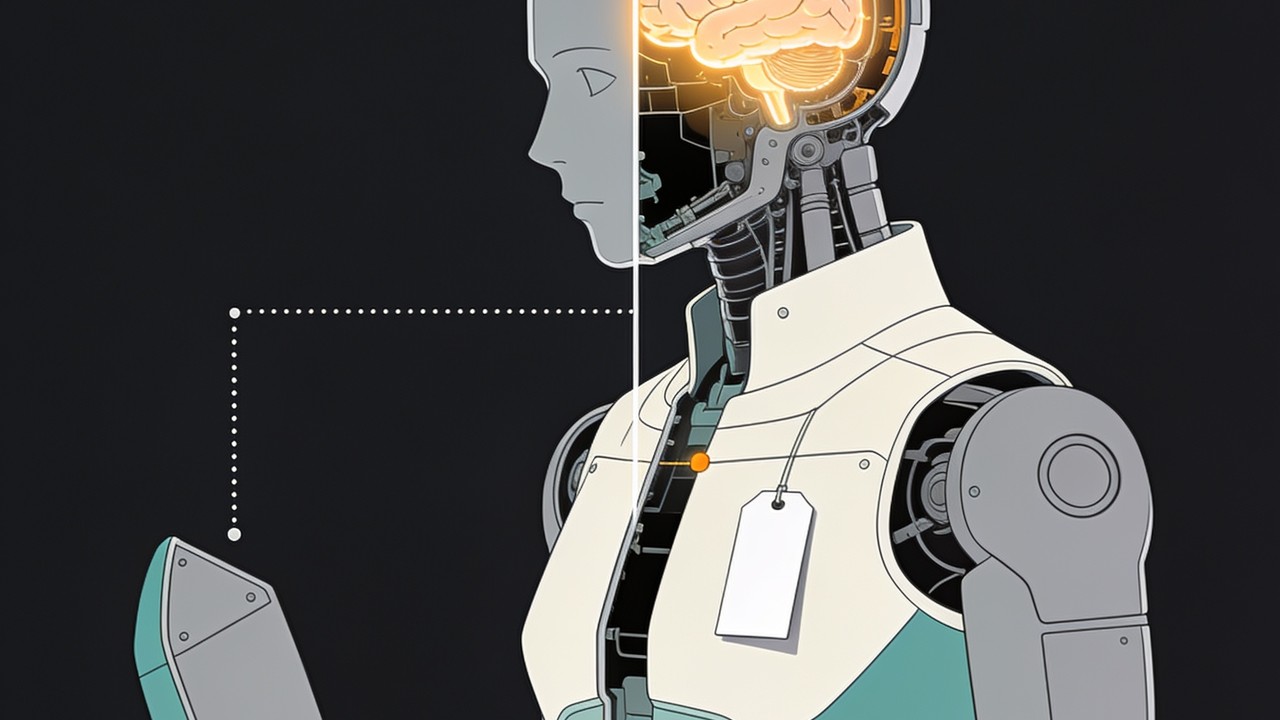
Meta and Shanghai-based Fourier reportedly built a humanoid prototype called Max in about three months, according to The Information. Meta says the work is for internal research, with no plans to sell the units and no announced release date.
The robot stands about 1.5 meters tall, weighs 48 kilograms, and runs on an Nvidia Jetson Thor chip. It has five-fingered hands, speakers, and a display that mimics facial expressions. The two companies began work on a second prototype in September. A working humanoid in a single quarter, from a company that has not built factories, is a statement about where the difficulty in this field now sits.
What was reported, and what wasn't
Reuters said it could not independently verify the report. The supplied coverage also describes unconfirmed speculation about a prototype involving Unitree, a different Chinese robotics company. This column treats the Fourier account as credible but single-sourced, and treats the Unitree speculation as noise.
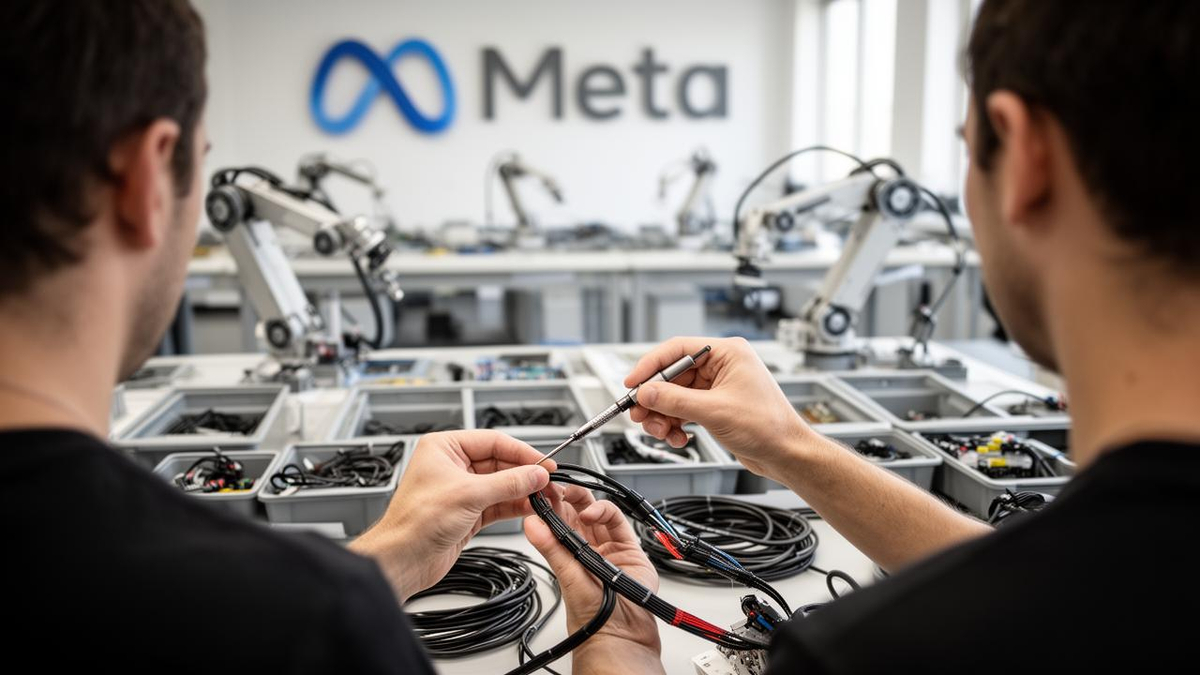
The reporting says the companies' respective contributions remain unclear. We don't know whether Fourier supplied only the body or also the actuation, the low-level control and the integration work. Everything below depends on that split being roughly what it looks like.
The owned layer
Meta has emphasized robotics software, sensors and AI models rather than mass production, according to the supplied article. It also reports that Meta acquired Assured Robot Intelligence, a developer of robotic foundation models, in May 2026. The collaboration is framed as giving Meta's Muse AI agent a physical form for household tasks. Read together, the pattern is software-first. The mind, meaning the model, the sensors and the agent, stays in-house, and the body comes from a specialist.
This is how Meta handles most of its infrastructure. It owns the layer where its differentiation and data accumulate, and it buys the layer that is capital-intensive and slow to iterate. A three-month prototype cycle is what you would expect when one side doesn't have to stand up a supply chain.
If bodies can be sourced in a quarter, the defensible assets are the model and the system that feeds it. Buying a foundation-model developer, rather than a hardware maker, is consistent with that view. It is not proof of it, because the acquisition's role in Max has not been described.
The same split in design
Dulo, co-founded by Sebastian Thrun and Adrian Aoun, has reportedly raised a $130 million seed round, also according to The Information. The San Francisco startup is developing AI models meant to generate aircraft and automotive designs from user specifications. It also aims to automate engineering verification and plans to outsource manufacturing. Reported investors include Eric Schmidt, John Doerr, DST Global, Construct Capital and Lowercarbon Capital.
Dulo is not a robotics company, and the comparison has limits. But the structure is the same. The model and the verification step are owned, and the physical production is rented. In both cases the money and the claimed differentiation sit on the side that decides what gets built and whether it works.
A precedent already in the market
Selling the model layer separately from the body is not new. Foundation-policy vendors such as Physical Intelligence and Skild AI sell a policy and fine-tuning stack to hardware makers rather than building bodies themselves. Nvidia's simulation and compute platform plays a similar role, supplying a common substrate that any body can sit on. The Meta report differs in who is doing it. A platform company with its own consumer agent is going straight to a contract hardware partner instead of selling a policy to many.
Consequences for hardware makers
If the split holds, the hardware maker's position changes. A supplier that builds to a customer's specification, with the customer's model, sensors and roadmap, has less pricing power and less strategic independence than an OEM with its own brand and software. The customer can also qualify a second supplier once the interfaces are known.
Fourier, founded in 2015, carries $190M in total funding per the AI Market Watch index, which tracks about 5,000 companies and is a coverage sample, not a census. Fourier previously developed rehabilitation robots and its GR humanoid series. That is a body of hardware experience worth selling, but a modest funding base for a company that might end up as someone else's factory.
Per the AI Market Watch index, name-matched news items for Unitree ran at 11 over the last 90 days against 10 in the prior 90, over pipeline-ingested sources only. Attention to Unitree is flat, so the speculation did not show up as a surge. Whether Unitree would accept contract-supplier economics is a separate question the reporting doesn't answer. A company with its own consumer line and brand has more to lose from the arrangement than one still establishing itself.
Per the AI Market Watch index, news tagged to the embodied-AI and robotics segment ran at 179 items over the last 90 days against 163 in the prior 90, covering pipeline-ingested sources only. The sector is getting more coverage, but that says nothing about who captures the margin.
What would break the thesis
The report is unconfirmed. Reuters could not verify it, and Meta's own framing is internal research, not a product. A research prototype built quickly with a partner's help says little about whether Meta would stay with an outsourced body once it faces production volumes, safety certification and repair logistics. Those are the pressures that historically push software-first companies to pull hardware in-house.
The reported prototype also does not establish that Max can reliably perform household work. A body that was easy to source but cannot manipulate objects dependably would show the opposite of the thesis: the body mattered after all.
Dulo's version of the risk is different. The available reporting does not describe customers, model results or a valuation. Its plan to outsource manufacturing makes the handoff from design to an external producer a practical point to examine. If generated designs need heavy human rework before a manufacturer accepts them, the owned layer is less valuable than the seed round implies.
What to watch
Builders and investors should look for evidence about who owns the control model, not for prototype speed. The next useful evidence is a demonstration of manipulation and navigation that identifies the robot's tasks, the AI system controlling it and each partner's role. The reported Max 2 design calls for revised hands and additional sensors to help with stairs, but its capabilities remain unverified. If Max 2 climbs stairs and handles objects under Meta's models, with the supplier credited for the body only, the split is real.
For Dulo, the watch item is verified specifications. A design that satisfies stated requirements and passes cleanly to an outside producer would show that the verification layer is the part worth owning.
The last item is political. A US platform company building its humanoid with a Chinese partner invites Western policy and supply-chain scrutiny, and the reporting so far doesn't say how Meta would answer it. Components, data flows and where the model runs would all become questions. That scrutiny could do more to determine whether the body stays rented than any engineering milestone.
Notes. The open question is whether Meta's contribution goes beyond models into control and integration, which would make Fourier a supplier in name only. The reporting does not settle it.
