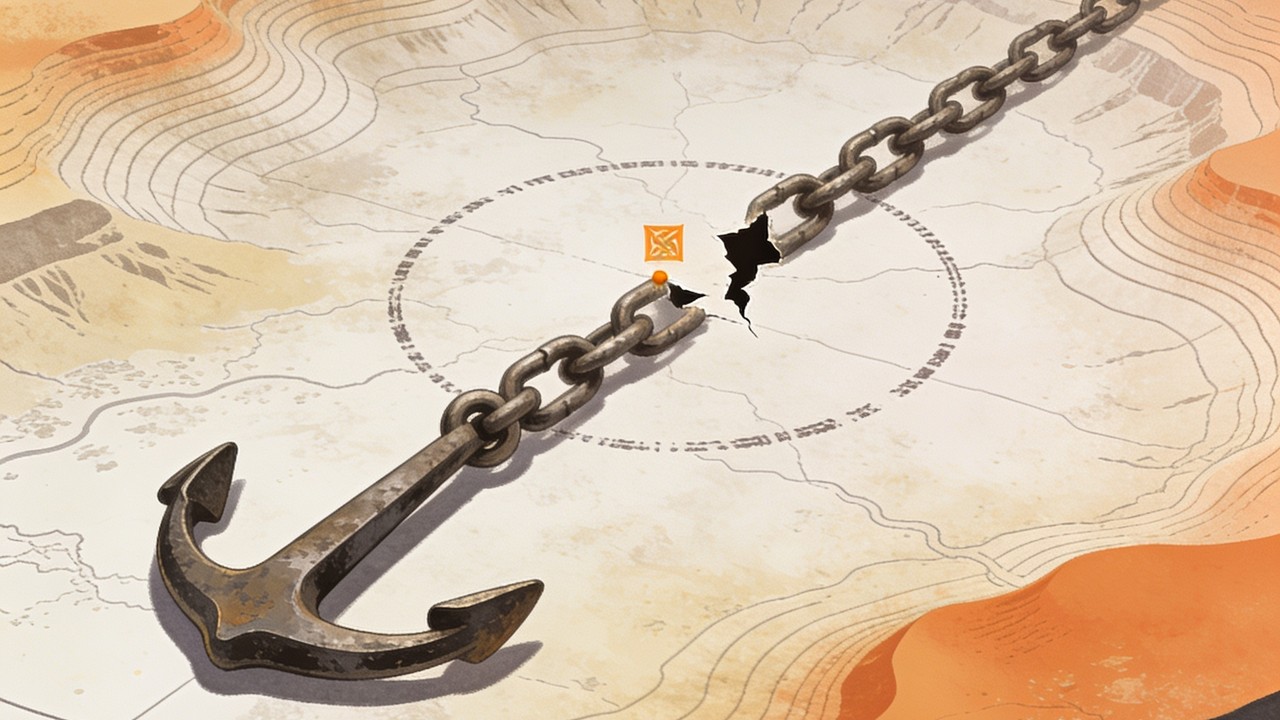
The Great Unbundling: Frontier Labs Exit the API Era
Anthropic's 20-year, $19 billion data center lease with TeraWulf, signed in the same week the company restored Claude Fable 5 after a three-day government-ordered halt, marks a structural pivot that extends beyond any single deal. The infrastructure commitment, reported on July 7, 2026, is the largest single compute lease in the AI industry's history, and it arrives alongside a cluster of moves that together signal the end of the model-licensing era as the dominant business model for frontier labs.
The same week, xAI merged into SpaceX and rebranded as SpaceXAI following SpaceX's $750 billion IPO, creating a vertically integrated entity that couples frontier-model capability with satellite communications and physical infrastructure. OpenAI's deployment arm acquired the consulting firm Northslope, internalizing the integration layer that previously belonged to channel partners. The company also launched ChatGPT Work, an enterprise agent that combines coding and document creation into a single desktop super-app, after receiving mandatory U.S. government pre-clearance for its GPT-5.6 model series. And Anthropic introduced usage-based pricing for Claude Fable 5, ending the flat-rate subscription model that has defined consumer AI since ChatGPT Plus launched in 2023.
The dense clustering of these announcements in a single week is not coincidence. It reflects a coordinated unbundling of the old API-centric model — where labs trained models, exposed them through APIs, and left distribution, integration, and margin to partners — and a migration toward three distinct but overlapping strategies: government-mediated gatekeeping, vertical hardware integration, and direct enterprise deployment.
The government-as-gatekeeper pattern hardens
OpenAI's GPT-5.6 series, comprising Sol, Terra, and Luna, was released only after a mandatory review by the U.S. Department of Commerce's NIST AI Standards Innovation Center. The review was triggered by GPT-5.6's elevated cybersecurity and biological/chemical risk profiles, which crossed the federal government's capability threshold for mandatory safety disclosures under the 2023 Biden Executive Order. This is not a voluntary framework. The Defense Production Act now governs whether a frontier model can be deployed domestically, not just whether it can be exported.
Anthropic's Fable 5 experience provides the companion case. The model was released on June 9, pulled on June 12 after the U.S. government and Amazon raised safety concerns, designated as a "proliferation-grade" model, and restored only after Anthropic remediated 99% of flagged issues. The three-day suspension and restoration cycle is the new normal: frontier model release is no longer a purely commercial decision but a sovereign review process with real-time regulatory constraints.
Anthropic also introduced the Cyber Jailbreak Severity (CJS) framework, a five-level scoring system developed with Amazon, Microsoft, and Google under Project Glasswing. The framework evaluates jailbreak risks across four dimensions — capability granted, misuse potential, ease of weaponization, and detectability — with severe findings triggering a 24-hour escalation and potential government reporting. This is a structural contribution to the industry's safety substrate, but it also serves a competitive function: by writing the playbook for jailbreak severity assessment, Anthropic positions itself as the norm-setter, potentially raising compliance costs for rivals that lack similar frameworks.
The implication is clear. Frontier labs now require government relationship infrastructure alongside R&D capability. The fixed cost of compliance — legal teams, red-team operations, scoring frameworks, and Washington presence — creates a new barrier to entry that favors incumbents with both capital and institutional credibility. The old model of "release first, ask forgiveness later" is structurally unavailable to labs that want to deploy frontier capability in the U.S. market.
Vertical integration as capital escape velocity
Anthropic's $19 billion, 20-year lease with TeraWulf is the most dramatic example of the infrastructure buildout, but it is not the only one. xAI's merger into SpaceX after the $750 billion IPO creates a funding structure that no other frontier lab can match — a public-company balance sheet attached to a physical-infrastructure giant with its own satellite network, launch capabilities, and edge-compute nodes. DeepSeek, meanwhile, has quietly begun developing custom inference chips, a project that has been running for about a year and focuses on reducing reliance on NVIDIA and Huawei. The Chinese lab is simultaneously pursuing its first external funding round, reportedly seeking $7 billion at a valuation between $52 billion and $59 billion.
The pattern mirrors the hyperscaler playbook. OpenAI developed the Jalapeño inference chip with Broadcom. Google has TPUs. Amazon has Trainium and Inferentia. DeepSeek's choice to start with inference rather than training silicon is strategically rational — inference is the recurring, user-count-driven cost center for scaling API services, and it requires less advanced process technology at the 3nm node than training-focused designs. The move also updates the canonical case study of DeepSeek as a capital-efficiency champion: the $7 billion raise and the pivot to proprietary silicon suggest that the capital-compression arc that defined its early efficiency is giving way to a capital-intensive vertical integration phase.
In China, the vertical integration trend extends further. DeepSeek and Zhipu AI are both developing inference chips, while Alibaba, ByteDance, and Z.ai have engaged Beijing on restricting overseas access to their most advanced models. The discussions, led by China's Ministry of Commerce, include potential measures like geo-blocking APIs, halting future open-weight releases, or establishing a tiered system that bars frontier models from public release. No specific timeline has been confirmed, and officials may limit restrictions to future models only. But the direction is clear: Chinese frontier labs are mirroring the U.S. pattern of sovereign control, creating a bifurcated global market where Chinese and American models become increasingly walled off from each other.
Direct enterprise capture
OpenAI's acquisition of Northslope and the launch of ChatGPT Work represent the third leg of the unbundling: internalizing the enterprise integration layer that was previously outsourced to consultancies, system integrators, and channel partners.

ChatGPT Work combines ChatGPT and Codex capabilities into a unified agent that can gather context from Slack, Gmail, Google Drive, calendars, and CRMs to produce documents, spreadsheets, presentations, and web apps. The unified plugins directory signals a platform strategy aimed at locking in workflows across enterprise tools. OpenAI reports that Codex already has over 5 million weekly users, with more than 1 million non-developers using it for general work tasks. The launch positions OpenAI directly against Anthropic's Claude Cowork and Microsoft 365 Copilot, but with a different structural logic: OpenAI is not just building a copilot; it is building a super-app that replaces the workflow layer entirely.
The Northslope acquisition provides the integration expertise that makes this credible. By owning the implementation layer, OpenAI can capture recurring services revenue, reduce partner dependency, and maintain tighter feedback loops from production environments to model training. This is the same logic that drove hyperscalers to acquire consulting arms during the cloud adoption cycle, but compressed into a faster timeframe.
Anthropic's Claude is following a parallel path into enterprise workflows. Small businesses are increasingly using Claude to replace Salesforce, moving core business functions to AI-native workflows. The pattern undermines the distribution moat of legacy SaaS providers and raises the question of whether vertical SaaS itself is a transitional architecture rather than an enduring one.
The usage-based pricing move for Claude Fable 5 — ending the flat-rate subscription model — is a direct consequence of this enterprise pivot. Anthropic will charge $10 per million input tokens and $50 per million output tokens on top of monthly subscription fees, matching API rates. The flat-rate model, which has been the dominant bargain since ChatGPT Plus, is economically unsustainable for advanced reasoning models that consume far more tokens in hidden chain-of-thought processes. As OpenAI's former head of ChatGPT Nick Turley noted, an unlimited AI plan in the agent era is like an unlimited electricity plan. The pricing shift forces consumers to confront the true cost of frontier intelligence, and it will likely reshape pricing across the entire segment.
The counter-signal: infrastructure dependency and regulatory fragmentation
The unbundling thesis depends on frontier labs successfully executing three parallel strategies simultaneously. Each carries a named risk.
Anthropic's $19 billion TeraWulf lease locks in compute capacity for two decades, but it also ties the company to a single provider that is pivoting from bitcoin mining to AI infrastructure. If TeraWulf fails to deliver on energy or operational targets, Anthropic faces a capacity crunch that no alternative provider can quickly fill. The 20-year term is an extraordinary commitment to a counterparty with no track record in hyperscale AI compute.
The government gatekeeping pattern introduces regulatory fragmentation risk. The U.S. government's review of GPT-5.6 and the Fable 5 suspension demonstrate that the regulatory apparatus is now a real-time constraint on frontier deployment. But the framework is still being defined: NIST CAISI currently conducts voluntary evaluations and has not yet defined mandatory testing standards. The risk is that the current de facto mandatory review process becomes codified in ways that slow release cycles, create legal uncertainty for enterprise customers, or bifurcate the market between government-approved and consumer-grade models.
Anthropic's own CJS framework acknowledges temporal risk: the same model output can be CJS-4 before a vulnerability is publicly known and CJS-0 after scanners detect it. The exponential risk scaling (each level representing multiples of the previous) reflects the non-linear nature of real-world harm, but it also creates a classification system that could be weaponized by regulators to delay releases indefinitely.
The vertical integration bet carries execution risk. DeepSeek's chip development program is in early stages and will take well over a year to reach tape-out and mass production. Even after tape-out, access to advanced foundry nodes and high-bandwidth memory remains constrained by U.S. export policy. The immediate competitive threat from DeepSeek's chip effort is not to NVIDIA but to Huawei, which currently holds roughly half the ~$50 billion China AI chip market that NVIDIA vacated. But if DeepSeek succeeds, it will have built a hardware moat that no other Chinese lab can replicate quickly — and if it fails, it will have burned billions on a sunk cost.
The structural implication
The old model-licensing playbook assumed that frontier labs would remain upstream, selling capability through APIs while hyperscalers and enterprises handled distribution, integration, and deployment. The cluster of events in the week of July 6-12, 2026, invalidates that assumption.
Frontier labs are now direct competitors with their former channel partners. OpenAI's ChatGPT Work competes with Microsoft 365 Copilot, even as Microsoft remains OpenAI's largest investor and compute provider. Anthropic's Claude is replacing Salesforce, even as Salesforce remains a potential partner for enterprise AI deployment. The tension between hyperscaler investment and downstream competition is not new — it was visible in the Amazon-Anthropic relationship from the start — but it is now structural and unavoidable.
The unbundling has three consequences for the industry's center of gravity. First, the capital requirements for frontier labs have bifurcated: you need compliance infrastructure (government relations, red-team frameworks, scoring standards) and hardware infrastructure (custom chips, multi-year compute leases, data center partnerships) alongside the model training capability that was already expensive. The capital compression arc that produced DeepSeek's efficiency breakthrough is being replaced by a capital expansion arc that rewards labs with access to sovereign balance sheets, whether through IPO proceeds (SpaceXAI), hyperscaler partnerships (OpenAI, Anthropic), or state-backed funds (DeepSeek, Zhipu, MiniMax).
Second, the distribution moat is shifting from API access to workflow integration. The labs that win will be those that embed their models into the operating systems of enterprise and consumer workflows — not those that offer the best API pricing or the lowest latency. ChatGPT Work, Claude Cowork, and the emerging super-app strategy are the front lines of this competition.
Third, the sovereign AI dynamic is hardening on both sides of the Pacific. The U.S. government now pre-clears domestic model releases. China is considering restricting overseas access to its frontier models. The result is a world where the best models from each region are increasingly unavailable to the other, creating parallel ecosystems that will diverge in capability, cost structure, and safety standards. The open question is whether this divergence accelerates or constrains the overall pace of AI advancement — and whether the unbundled, vertically integrated, government-mediated frontier lab can sustain the rate of progress that the old API era delivered.
