
The Inference Pivot: From Training Arms Race to Energy-Efficient AI Plumbing
Cerebras Systems is planning a $3B+ IPO at a valuation exceeding $35 billion, representing a 60% premium over its last reported private valuation of $22 billion in February 2026. That valuation premium tells the story of this column: the market is now rewarding inference efficiency, not just training-scale ambition.
For two years, the AI infrastructure conversation has been dominated by training compute—how many H100s were needed to pretrain the next frontier model, which labs had reserved capacity at which neo-clouds, and whether the $100B training cluster was coming in 2027 or 2028. That framing is shifting. The bottleneck is migrating from pretraining flops to inference throughput per watt, from GPU scarcity to power-grid scarcity, and from monolithic model-serving to orchestrated, disaggregated inference architectures. The evidence arrived in four separate announcements this week.

Cerebras's wafer-scale CS-3 system has demonstrated inference throughput advantages that its IPO prospectus will likely feature prominently. In benchmarks against Nvidia's DGX B200, the CS-3 achieves 21x higher throughput on Llama 3 70B reasoning workloads while drawing only 23kW versus the DGX B200's 14.3kW, yielding roughly 2.2x better performance per watt. The advantage is structural: the CS-3's on-wafer memory bandwidth of 27 petabytes per second exceeds Nvidia interconnects by over 200x, reducing the memory bottleneck that cripples GPU inference on long-context agent workloads.
This is not a training story. Cerebras has positioned its hardware as an alternative to GPU clusters for both training and inference, but the IPO pricing at $35B+—more than triple its Series F valuation from early 2025—suggests investors are betting on the inference side of that equation. The company's partnership with the UAE's G42 to build a supercomputer has been widely reported, but the strategic inflection is that inference revenue, not training contracts, will determine whether the valuation holds post-listing.
Sunrise, the Chinese pure-play inference GPU startup, raised over 1 billion RMB in its seventh financing round since spinning out just over a year ago, bringing total capital to approximately 4 billion RMB and a valuation exceeding 10 billion RMB. The company has become China's first inference-only GPU unicorn, and its S3 chip deliberately eschews HBM in favor of LPDDR6 memory, optimizing for the KV-cache access patterns of agentic AI rather than the all-to-all bandwidth of training.
Sunrise's bet is that the inference market will demand four to five times the compute of training, and that the memory-wall problem for long-context inference can be solved with heterogeneous caching—spanning LPDDR6, standard DRAM, and NVMe—rather than expensive HBM stacks. This is a direct architectural challenge to the conventional GPU design philosophy. If Sunrise's S3, S4, and S5 generations can deliver competitive token costs while avoiding HBM's supply constraints and price premiums, the "inference-native" design pattern could become a template for a broader market shift away from training-dominant architectures.
Moonshot AI's Kimi team introduced Prefill-as-a-Service (PrFaaS), a technical framework that decouples the prefill stage of inference from the decode stage across different datacenter clusters. The architecture achieves a 64% reduction in P90 time-to-first-token and 54% higher serving throughput compared to homogeneous baselines, with the KVCache transfer reduced 13-fold through hybrid attention mechanisms.
The PrFaaS design addresses a problem that becomes acute as models support longer context windows: the prefill stage—computationally intensive and memory-bound—scales differently than token generation. By moving prefill to specialized clusters (H200 GPUs) and decode to cost-optimized hardware (H20 GPUs), Moonshot AI is treating inference as a multi-stage pipeline rather than a monolithic server process. This disaggregation is precisely the pattern that infrastructure analysts have predicted for the 2026–2027 window, and it mirrors the modularity that hyperscalers already apply to their search and recommendation stacks.
The UK government's newly launched £500 million Sovereign AI fund made its first disclosed investment in Callosum, a software company building tools for chip interoperability across different hardware accelerators. This is not a model lab investment or a compute-buying program—it is a bet on the plumbing layer that enables diverse chips to work together efficiently.
The UK's strategic logic is instructive. Instead of trying to build a domestic Nvidia competitor or fund a frontier model that would require billions in training compute, the government invested in the software layer that reduces vendor lock-in and improves utilization of specialized hardware. Callosum's interoperability tools, if successful, would allow a British AI startup to mix Cerebras CS-3s for long-context inference, Groq LPUs for low-latency serving, and standard GPUs for training without rewriting their stack. This is the infrastructure equivalent of building a standard gauge railway rather than subsidizing a particular locomotive manufacturer.
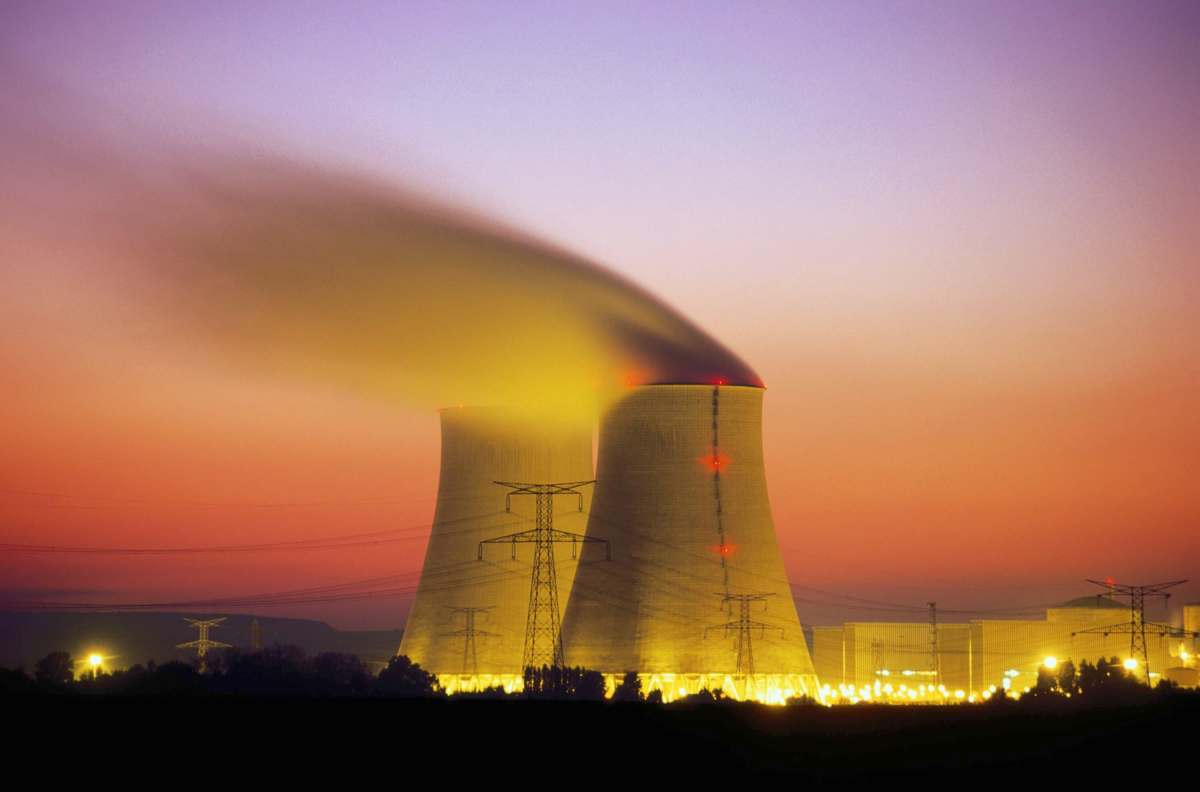
Blue Energy raised $380 million to build grid-scale nuclear reactors in shipyards, with a 1.5 gigawatt project in Texas scheduled to begin construction in Q3 2026. The project is developed in partnership with Crusoe for an AI data center, with initial gas power potentially coming online by 2028 and nuclear transitioning by 2031.
Blue Energy's model—pre-fabricating light water reactors in shipyards and barging them to site—directly addresses the energy bottleneck that has become the binding constraint for inference at scale. A single Llama 3 70B inference request consumes roughly 0.3 watt-hours. At enterprise scale, millions of requests per second translate into hundreds of megawatts of continuous load. The CoreWeave story of the 2022–2025 period was about financing GPU capacity; the story of 2026–2029 may well be about financing power capacity.
The shipyard manufacturing approach applies the same logic that neo-clouds applied to GPU deployment: treat a constrained resource as a manufacturing problem rather than a construction problem. Blue Energy claims it can cut nuclear deployment timelines from over a decade to two to four years and costs from ~$10,000/kW to between $2,000 and $5,000/kW. If those targets hold, the energy bottleneck for inference becomes solvable at scale.
The four announcements share a common structure: each is a bet on efficiency, orchestration, and specialization rather than raw brute force. Sunrise optimizes for inference-specific memory patterns. Moonshot AI treats inference as a multi-stage pipeline across heterogeneous clusters. Callosum builds the software layer that makes heterogeneous hardware practical. Blue Energy addresses the power-density problem that constrains every inference cluster larger than 10,000 GPUs.
The precedent that validates this pattern is the Run:ai acquisition by Nvidia in 2024, where GPU orchestration software was absorbed into CUDA because it had become strategically essential. The difference is that the current wave of inference optimization is happening outside of Nvidia's stack, and some of it—Sunrise's LPDDR6 approach, Callosum's interoperability tools—is explicitly designed to reduce dependence on Nvidia's ecosystem.
The counter-signal, and it is a serious one, is that the $35B Cerebras valuation depends on sustained commercial execution against Nvidia's evolving Blackwell platform. While the CS-3 shows 2.2x better performance per watt in specific long-context benchmarks, independent analysis indicates that the B200 leads in performance per watt per dollar by a factor of 1.5x to 3x, reflecting the higher manufacturing costs of wafer-scale technology. The IPO prospectus will need to show that Cerebras's cost structure improves with volume and that its performance advantage holds across the diverse workload mix that customers actually run, not just the benchmark scenarios the company selects.
Sunrise faces a similar challenge: its LPDDR6 strategy works for KV-cache-bound agentic inference, but the same architectural choice may become a liability if training-inference convergence drives workloads toward unified hardware. Moonshot AI's PrFaaS latency improvements come partly from hardware specialization (H200 for prefill, H20 for decode), and the 54% throughput gain over baseline partially reflects hardware differences rather than pure architectural efficiency, with the architectural contribution closer to 15% at equal hardware cost.
These caveats do not invalidate the thesis; they refine it. The inference pivot is real, but it will not be a smooth substitution of one dominant architecture for another. It will be a messy, contested transition in which specialized hardware, orchestration software, energy infrastructure, and government policy all compete to control the bottleneck.
What the Cerebras IPO timeline, the Sunrise funding round, the Moonshot AI architecture, the UK sovereign investment, and the Blue Energy reactor project all signal is that the market has internalized a structural shift. Training compute was a race to the frontier; inference compute is a race to the margin. The winners in the next phase of AI infrastructure will be defined not by how many petaflops their hardware can deliver, but by how cheaply, efficiently, and reliably those flops can be delivered for the workloads that actually run at scale.
Notes. This week contained no news from the orchestration or observability tiers that would materially alter the inference-pivot thesis. LangChain, LlamaIndex, and the observability players were absent from Layer 1, and their absence is itself notable: if inference efficiency becomes the dominant competitive vector, the orchestration layer may face consolidation pressure similar to what GPU orchestration faced with the Run:ai acquisition. The column leaves open the question of whether the plumbing layer—chip interoperability, disaggregated inference, heterogeneous scheduling—will remain independent or be absorbed into the hardware stack.
