The Verticalization of AI: Frontier Labs Own the Stack
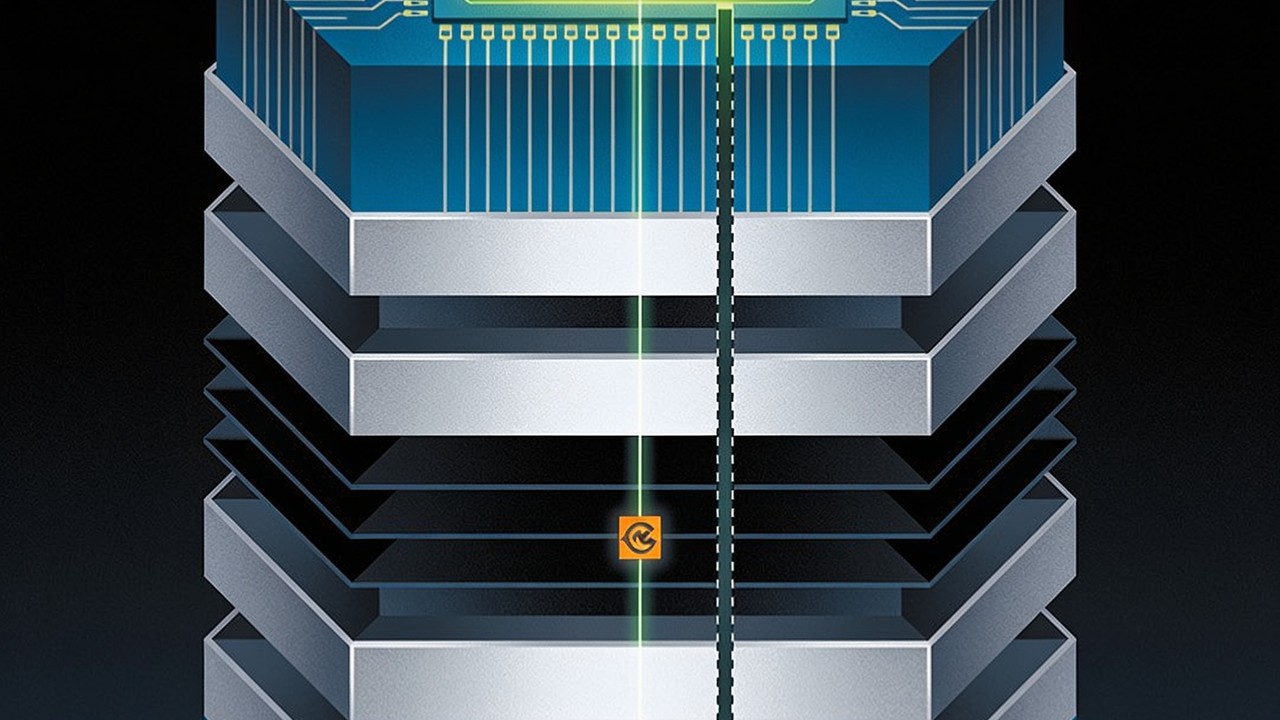
OpenAI revealed its first custom AI processor on June 24, 2026. The Jalapeño chip, co-developed with Broadcom as an application-specific integrated circuit for AI inference, matches Nvidia Blackwell performance while delivering roughly 50% lower cost per token, according to early testing (https://www.theverge.com/ai-artificial-intelligence/955939/openai-reveals-its-first-ai-processor-jalapeno). Broadcom CEO Hock Tan told Reuters the chip performs comparably to Google's Tensor Processing Units (https://www.theverge.com/ai-artificial-intelligence/955939/openai-reveals-its-first-ai-processor-jalapeno).
That single artifact is best understood not as a product launch but as a structural signal. The frontier labs are no longer competing on model architecture alone. They are vertically integrating across talent, capital, chips, and compute access to create a durable new moat — one that reshapes the competitive landscape and raises the entry bar for anyone without a multi-billion-dollar infrastructure budget.
The Talent Layer: Poaching as Strategy
The Jalapeño chip did not emerge in isolation. It followed two high-profile talent captures that drained Google DeepMind of foundational researchers. On June 18, Noam Shazeer — co-inventor of the Transformer architecture and co-lead of Google's Gemini — left to lead AI architecture research at OpenAI (https://www.aitimes.com/news/articleView.html?idxno=211891). Two days later, Nobel Prize-winning AlphaFold lead John Jumper announced he was joining Anthropic (https://www.theverge.com/ai-artificial-intelligence/953024/googles-nobel-prize-winning-ai-researcher-is-joining-anthropic).

These moves fit a recurring pattern: founder-lab splits and senior researcher defections create cultural coherence that capital alone cannot replicate. Shazeer's return to OpenAI — he was a co-author of the 2017 "Attention Is All You Need" paper — gives the company architectural leadership at a moment when custom silicon demands tight model-hardware co-design. Jumper's move to Anthropic signals that the company is broadening beyond frontier language models into scientific AI, a domain where Google DeepMind has held a commanding lead since AlphaFold.
Google DeepMind now faces a porous talent pipeline at the very top of its research ranks. The loss of a Transformer co-inventor and a Nobel laureate in the same week is not routine attrition. It represents a payload capture that updates the OpenAI-Google rivalry and validates Anthropic as a destination for top-tier scientific AI researchers.
The Silicon Layer: Vertical Integration's New Frontier
The Jalapeño chip exemplifies a deeper logic. OpenAI designed its own inference ASIC to escape dependency on Nvidia's constrained GPU supply — a playbook already executed by Microsoft, Meta, Google, and Amazon. But the timing and scale are distinctive. OpenAI has committed to spending tens of billions of dollars on Broadcom chips, with a roadmap for next-generation versions starting in 2028 and annual updates thereafter (https://www.businesstimes.com.sg/companies-markets/telcos-media-tech/openai-broadcom-unveil-chip-run-models-faster-cheaper).
The chip targets inference specifically — the high-volume, cost-sensitive stage of AI serving where 80% of model expenses concentrate. By eliminating general-purpose GPU overhead and optimizing for OpenAI's specific token operations, custom silicon delivers a structural cost advantage that no software optimization can match. Broadcom CEO Hock Tan expects other frontier model creators to follow OpenAI's lead, predicting that every major lab outside China will eventually create custom accelerators (https://www.businesstimes.com.sg/companies-markets/telcos-media-tech/openai-broadcom-unveil-chip-run-models-faster-cheaper).
This is the vertical-integration thesis at the hardware layer: controlling the stack from model architecture down to the chip allows labs to widen the gap with smaller rivals who must rely on merchant silicon.
The Compute Layer: Alternative Supply Chains
The Jalapeño roadmap addresses long-run inference economics, but frontier labs still need training compute at a level seven times what any single cluster provided in 2025. That demand is creating alternative supply channels beyond the hyperscaler triopoly of AWS, GCP, and Azure.
On June 22, open-source AI startup Reflection AI signed a compute deal with SpaceX worth up to $6.3 billion, paying $150 million per month through 2029 for access to Nvidia GB300 chips at SpaceX's Colossus 2 data center near Memphis (https://techcrunch.com/2026/06/22/spacex-inks-compute-deal-with-reflection-ai-an-open-source-ai-lab/). The deal's 90-day cancellation clause after the first three months suggests hyperscaler compute agreements remain fungible — a structural force that keeps capital cycles short and labs reliant on continued fundraising.
SpaceX's pivot from running its own AI efforts to becoming a compute landlord mirrors a broader pattern: infrastructure owners monetize idle GPU capacity rather than compete in model-building. This creates a distribution channel for labs that cannot secure clusters through traditional cloud vendors. Reflection AI's open-weight strategy now has tangible compute backing, which could validate the thesis that open models can compete with closed frontier labs given equivalent hardware access.
The Capital Layer: Compression and Strategic Pricing
These vertical bets require capital at a scale that matches a full series A, B, and C combined in a single transaction. DeepSeek completed its first external funding round on June 20, raising over 50 billion yuan ($7B) at a valuation of 338 billion yuan ($47B) (https://www.hstong.com/news/detail/26061818450623602). Founder Liang Wenfeng personally contributed 40% of the round, and external investors — including Tencent and the National AI Industry Investment Fund — receive no voting rights and no board seats.

The structure is telling. DeepSeek operates outside the standard fundraise-to-burn cycle, backed by the profitable quant fund High-Flyer. The round aims to secure long-term domestic compute supply via the national fund and provide market-based pricing for employee options — not to subsidize a cash-burning race. This governance innovation — "no-control equity" — may become a template for other capital-intensive but founder-centric AI labs.
The capital-compression arc is also visible in China's world-model segment. Manifold AI raised $140M in a Pre-A round on June 19, achieving unicorn status within 12 months of founding (https://www.pingwest.com/a/314843). A pre-A round at unicorn valuation compresses what would normally be three or four capital cycles into one, reflecting a market where investors are pricing world-model tech as a structural bet rather than a vertical application.
The Counter-Strategies: Apple and OpenRouter
Vertical integration is not the only viable strategy. Apple announced Siri AI on June 20, powered by a partnership with Google Gemini rather than a homegrown foundation model (https://www.wired.com/story/siri-ai-hands-on-iphone/). The assistant uses on-device hyper-personalization based on user messages, photos, and emails, while leaning on Google's model for reasoning. This acqui-licensing-like pattern validates the hyperscaler distribution moat: Google gains distribution at massive scale without an explicit consumer-facing product, while Apple avoids the capital demands of frontier model development.
A different counter-strategy emerged from OpenRouter. On June 22, the API aggregation platform launched Fusion API, a commercial multi-model collaboration service that combines up to eight models in a three-stage pipeline (https://www.leiphone.com/category/yanxishe/9TGZvtD8CvNeaEKw.html). The launch comes days after Anthropic's Claude Fable 5 was restricted globally by U.S. emergency export controls, creating a market vacuum. OpenRouter claims that a mid-tier combination of Gemini 3 Flash, Kimi K2.6, and DeepSeek V4 Pro scores within 1% of Fable 5 on the DRACO deep-research benchmark, at roughly half the cost.
Fusion exemplifies the composite model pattern — an alternative to the "one giant model" monopolistic narrative. By standardizing mixture-of-agents academic research into a pay-as-you-go API, OpenRouter commoditizes the ability to combine cheap input tokens to avoid expensive output tokens. This weakens the pricing power of single frontier models by offering functional substitutes at structural discounts.
The Counter-Signal
The vertical integration thesis faces one specific risk this week. The U.S. government forced Anthropic to pull its two newest models — Fable 5 and Mythos 5 — after Amazon researchers found a way to bypass Fable 5's guardrails, triggering a national security ban (https://techcrunch.com/podcast/the-us-banned-anthropics-fable-5-release-but-the-numbers-dont-seem-to-care/). For developers building on Anthropic's platform, the immediate consequence is loss of access to two model generations, raising questions about deployment continuity under regulatory uncertainty.
This event crystallizes a recurring tension: frontier-model safety and government-mandated withdrawal create strange dual signals. The ban harms developer trust while potentially boosting Anthropic's IPO narrative by positioning the company as a national-security priority. But the core risk for the vertical integration thesis is that regulatory unpredictability undermines the value of owning the stack. If a lab can be forced to withdraw its best models at government discretion, the moat conferred by custom silicon and compute infrastructure becomes less durable — the state, not the lab, holds the ultimate veto.
The Implication
The winner in foundation-model AI may no longer be the lab with the best single model, but the organization that owns the most layers of the stack: talent for architectural innovation, custom silicon for inference economics, compute partnerships for training scale, and capital structures that fund all three without diluting control.

OpenAI's Jalapeño chip, Anthropic's talent pipeline, DeepSeek's governance innovation, and Reflection AI's compute deal all point in the same direction. The verticalization of AI labs is not a future scenario. It is the competitive logic of the present, visible in every major deal this week.
Notes. The Apple Siri AI partnership and OpenRouter Fusion API represent genuine counter-strategies that may outperform vertical integration for specific market positions. The question the column does not resolve: whether owning the stack delivers compounding advantages, or whether modular orchestration — routing across multiple models and infrastructure providers — proves more resilient to the regulatory and technical shocks that single-stack players cannot evade.
