Exina demonstrates MX1 CXL memory expansion for AI inference with Intel
The AMW Read
The Intel demonstration incrementally advances Exina's infrastructure position through memory-controller architecture, but absent performance measurements and completed customer validation limit demonstrated impact to the memory sub-segment.

Exina demonstrates MX1 CXL memory expansion for AI inference with Intel
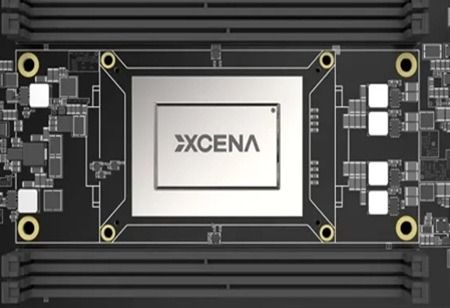
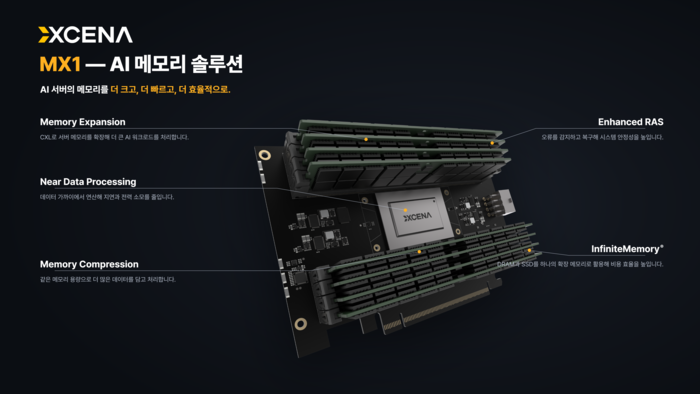
Exina demonstrated its MX1 memory platform with Intel's Xeon 6 server CPU at FMS 2026, showing how generative AI services can expand KV-cache storage into CXL memory instead of GPU memory. The fabless chip designer says its CXL 3.x platform supports memory expansion up to 2 terabytes with one server card and places more than 1,000 compute cores near memory to reduce data movement. Samsung Foundry manufactured the physical MX1 controller chip. Electronic Times reports that Exina raised 201.8 billion won in a Series B in May at a valuation of approximately 800 billion won, bringing cumulative funding to about 280 billion won.
The demonstration places Exina in the AI infrastructure market's effort to address memory bottlenecks through hardware architecture. Its approach combines expanded memory capacity with processing near the data, targeting the movement between memory and CPUs or GPUs that the report identifies as a constraint. The Intel demonstration provides a concrete integration example, but the article supplies no measured latency, throughput, power savings, or customer cost comparisons. Those omissions leave the size of the claimed efficiency gains unproven in this report.
For infrastructure builders and investors, the next decision point is customer validation: whether moving KV-cache storage to CXL memory improves usable capacity and operating economics while meeting inference performance requirements. Exina says it is concentrating on customer verification and initial adoption in 2026, with mass production and revenue expansion planned for 2027. Evaluating those deployments against GPU-memory configurations would help distinguish a working demonstration from a commercially compelling memory platform.